Introduction
Product professionals can pivot into alternative career paths like product growth, product marketing, developer relations, or AI evangelism. These related disciplines offer exciting opportunities to move beyond traditional boundaries.
 TechMediaArch.com |
| Professional at a career crossroads considering product management alternatives |
Product professionals wondering what to do after product management often pivot into alternative career paths, and can explore related disciplines or read more about Product Management vs Product Marketing: Key Differences to understand how closely aligned roles function in the market.
- Product growth
- Product marketing
- Developer relations
- AI evangelism
Pivoting Into New Industries
Reddit notes that product managers looking to pivot into different industries often move into diverse domains like FinTech, EdTech, Food Tech, Gaming, or Data Security.
Moving Into Strategic Finance and Venture Capital
Reddit reports that experienced product managers can leverage their core business strategy skills to transition into roles like venture capital, private equity, corporate strategy development, or entrepreneurship.
Early Entry Pathways for Students
Entering the product ecosystem requires deliberate educational choices early in an academic career. Leverage Edu states that students can enter the product management ecosystem after completing class 12th by enrolling in undergraduate programs or specialized courses tailored to product strategy and technology.
This early focus helps build foundational analytical capabilities.
At the same time, Quora mentions that becoming a product manager directly out of high school is rare because product management is generally considered a senior role that requires transferable skills, technical knowledge, or domain experience. High school graduates typically need to build foundational expertise through higher education first.
Educational Foundations and Degrees
Choosing the right undergraduate degree shapes how future professionals approach complex business problems. Coursera observes that while a traditional university degree is not always mandatory, obtaining a relevant bachelor's degree helps build organizational, problem-solving, and market research skills needed for a career in this field.
Students often wonder if specific business degrees provide a direct pipeline into the industry. Woxsen University explains that graduates with a Bachelor of Business Administration can build strong product management profiles by focusing on specializations like entrepreneurship, digital marketing, or finance.
Furthermore, Quora highlights that graduates holding a Bachelor of Commerce degree can successfully enter the product management field because many product roles prioritize business acumen and user understanding over deep coding expertise.
Transitioning From Business Backgrounds
Final-year students without a technical background frequently look for practical entry points into the tech sector. Reddit indicates that final-year business administration students lacking a technical background can still break into product management by first targeting entry-level roles like program management, business analysis, or project management.
These intermediary roles bridge the gap between academic study and specialized tech careers. Professionals can also explore Product Management vs Business Development: Key Differences to see which departmental path aligns better with their commercial skills.
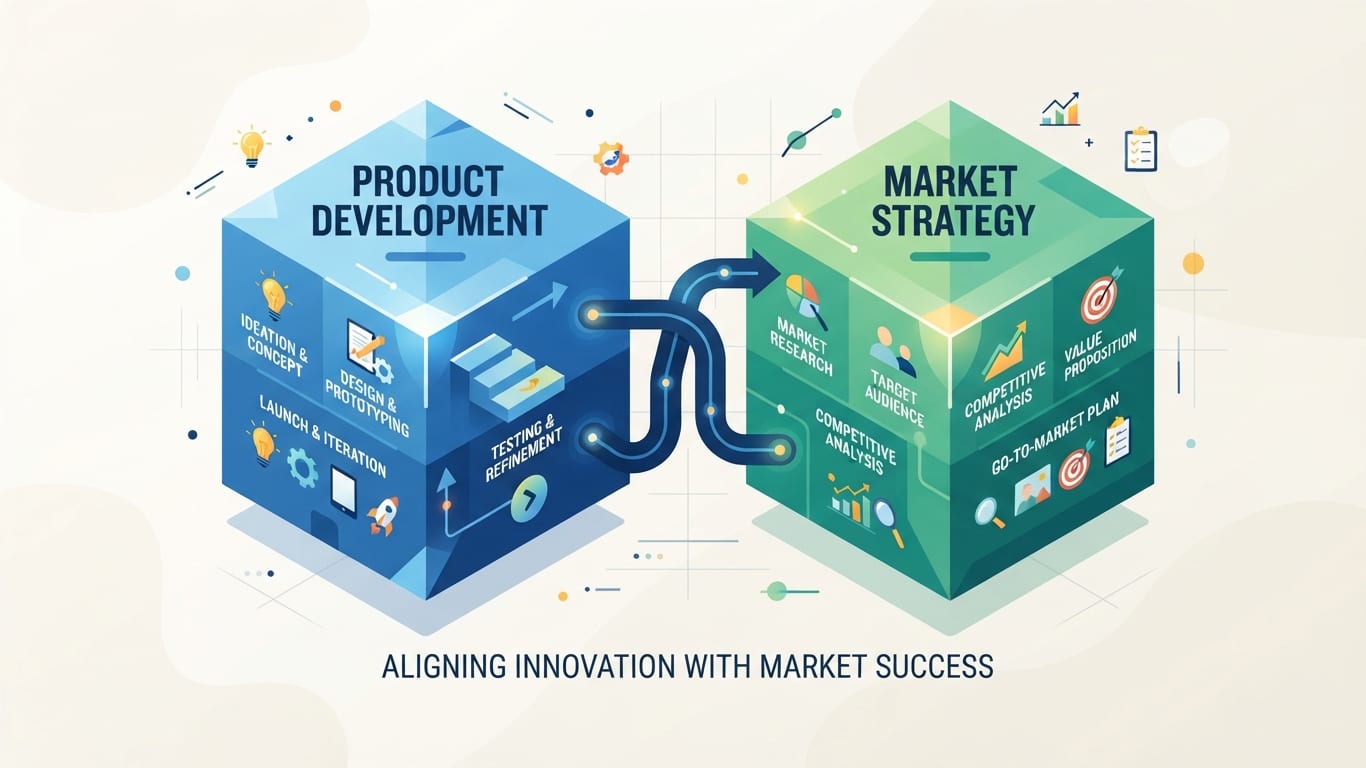
Professionals transitioning from business backgrounds benefit from understanding how internal execution differs from external market strategy. Gaining exposure to team coordination and resource allocation builds the operational confidence needed for higher-level strategic responsibilities.
 TechMediaArch.com |
| Business growth charts and strategic planning icons for career pivots |
Distinguishing Product Management From Project Management
Confusion often arises between operational delivery roles and strategic leadership positions within an organization. Atlassian clarifies that product managers focus on defining the what and why behind building products, whereas project managers concentrate on the how and when of execution.
Coursera adds that a product manager is in charge of a product's overall success across its entire lifecycle, while project managers shepherd specific tasks or projects to completion.
Day-to-day responsibilities highlight further distinctions in operational focus and scope. Here are key differences between the two disciplines:
- USC Online notes that product managers enhance products continuously based on user feedback and market innovations, whereas project managers oversee diverse company initiatives handling budgets, timelines, and communications.
- Reddit observes that project management tends to be an internal role focused on delivery, after which a completed project is handed off to the product manager who focuses on end results and external market steps.
- Asana explains that product managers ensure new features fulfill customer needs and business objectives, while project managers coordinate day-to-day team resources and task schedules to meet deadlines.
Software Tools and Strategic Horizons
The daily workflows of product and project professionals rely on distinct categories of digital platforms. ProductPlan points out that product management software helps professionals organize and communicate long-term product strategy, whereas project management software helps track task execution.
Time horizons also dictate how professionals approach their daily responsibilities and deliverables. Plane outlines that project management involves short-term, task-driven initiatives with specific deadlines, whereas product management involves long-term strategy and development for continuous market success.
Formatting and Professional Capitalization Standards
Writing about technology careers requires adherence to specific stylistic conventions regarding professional titles and functional terms. Headline Capitalization specifies that professional style guides dictate that general functional terms like product management should be written in lowercase letters unless they function as proper nouns or appear as formal titles directly preceding a person's name.
Grammarly reinforces this rule by noting that job titles and functional disciplines act as common nouns and require lowercase formatting when used generally within the body of a sentence.
Similarly, the Australian Style Manual emphasizes that organizational titles and professional roles should avoid capital letters in body text when referenced generically or when describing a particular position within an organization.
FAQ
can i do product management after 12th
Students can enter the product ecosystem after completing high school by enrolling in undergraduate programs or specialized courses tailored to product strategy and technology. However, becoming a product manager directly out of high school is rare because the discipline is generally considered a senior role requiring transferable skills or domain experience.
can i do product management after bba
Graduates with a business administration degree can build strong product management profiles by focusing on specializations like entrepreneurship, digital marketing, or finance. Final-year students lacking a technical background can still break into the field by first targeting entry-level roles like program management, business analysis, or project management.
can i do product management after bcom
Graduates holding a commerce degree can successfully enter the product management field because many related roles prioritize business acumen and user understanding over deep coding expertise. Building foundational organizational and market research skills through a relevant bachelor's degree helps prepare commerce graduates for strategic tech careers.
difference between product management and project management
Product managers focus on defining the what and why behind building products and oversee overall success across an entire lifecycle, whereas project managers concentrate on the how and when of execution by shepherding specific tasks to completion. Product management software helps organize long-term strategy, while project management software tracks task execution and short-term initiatives.
should product management be capitalized
Professional style guides dictate that general functional terms like product management should be written in lowercase letters. Job titles and functional disciplines act as common nouns and require lowercase formatting when used generally within the body of a sentence.