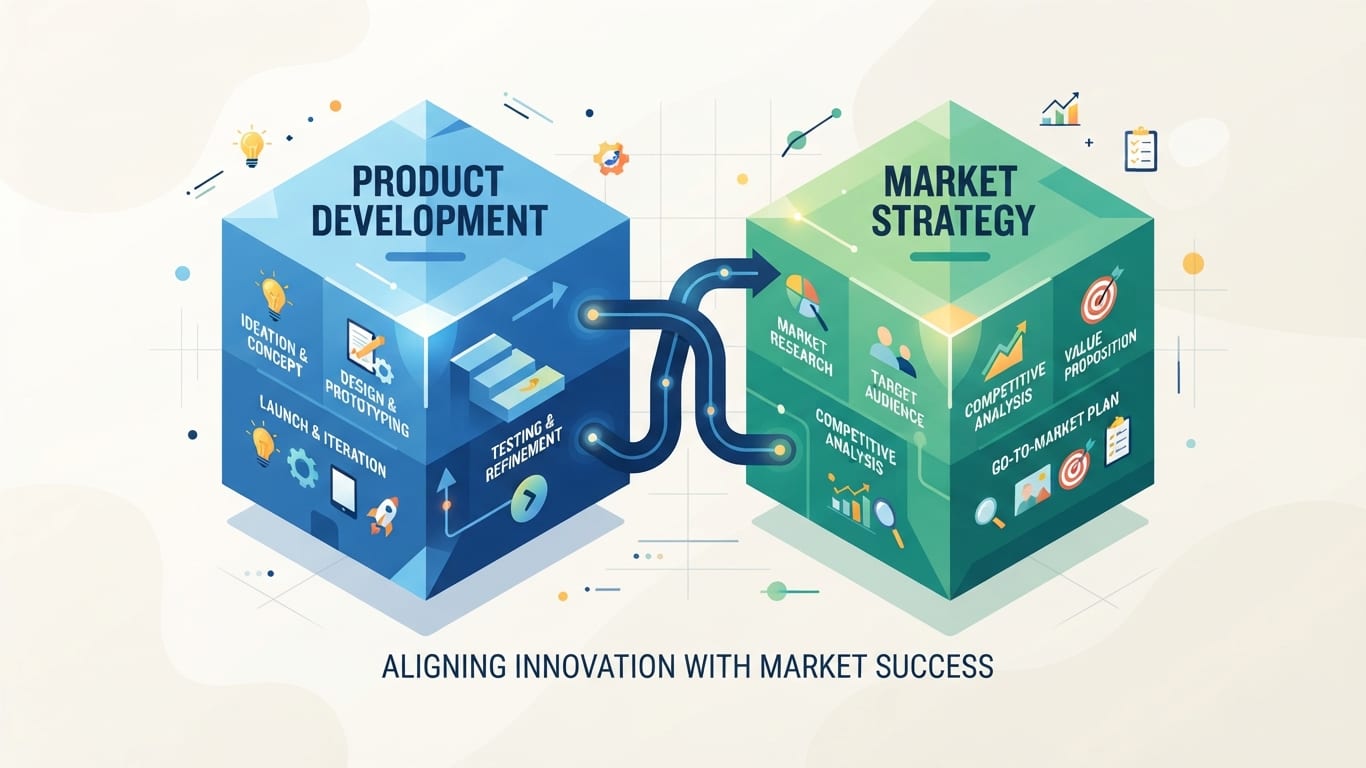
Product management strategically drives the development, market launch, and continual support of a company's offerings. It oversees the creation of items from idea to launch and through the end of their lifecycle.
 TechMediaArch.com TechMediaArch.com |
| Product manager reviewing a strategic roadmap on a glass wall |
Defining the Role and Function
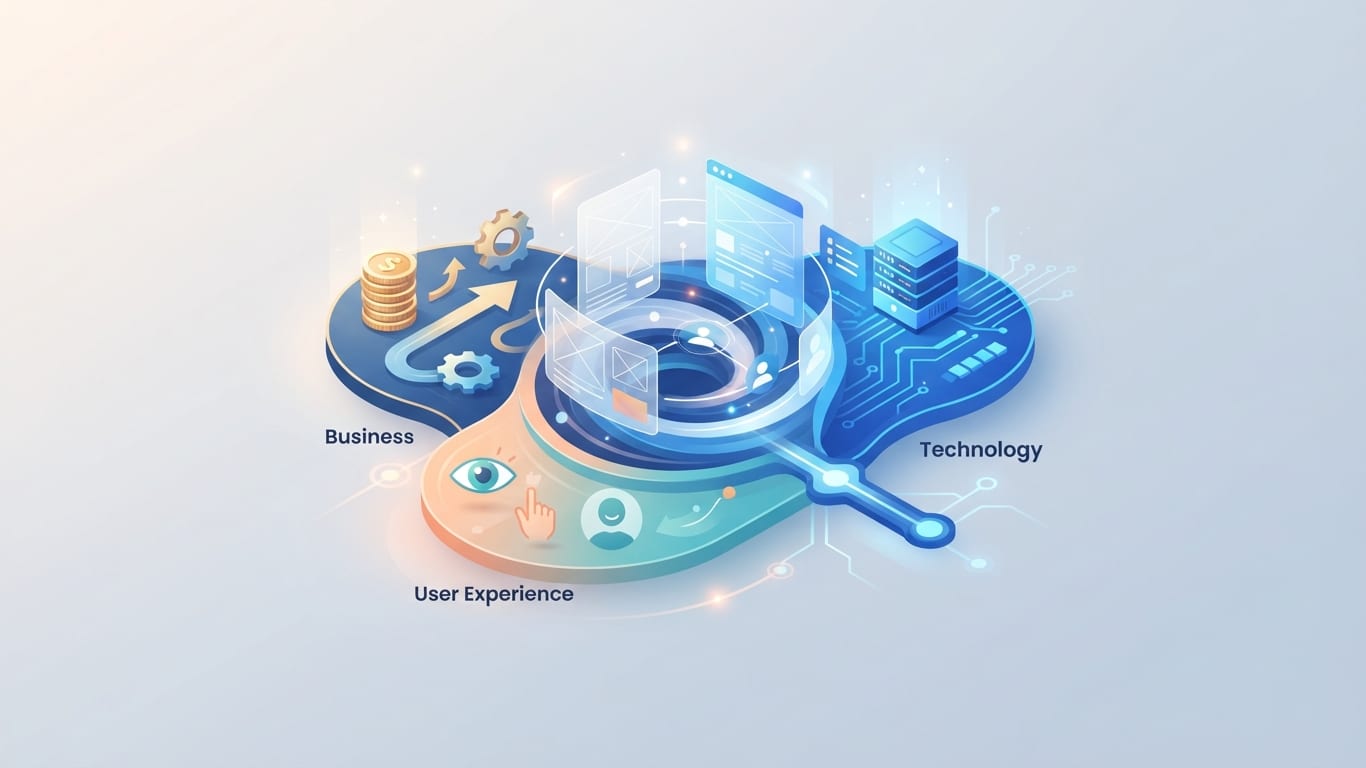
According to IBM, product management operates as both a position and a function implemented by professionals who emphasize user experience and market demands. Practitioners combine business, management, and technical perspectives to oversee a product's development and life cycle, as reported by the Pragmatic Institute.
Leading technology organizations often adopt a mini-CEO archetype across capability areas like customer experience and market orientation to maintain competitiveness, according to McKinsey.
Professional experience in the field often requires a bachelor's degree in fields like business administration alongside three to five years of related professional background, according to Indeed. Certified professionals possess formal training and exams demonstrating mastery of market analysis, product lifecycle management, strategic planning, and cross-functional leadership, as noted by the Pragmatic Institute.
Professionals seeking to build skills can evaluate The Best Way to Learn Product Management: A Complete Guide to understand training paths. Practitioners must constantly monitor external forces while aligning internal stakeholders.
IBM notes that the position requires direct interaction with user experience specialists. This interaction ensures that technical outputs match real human requirements.
The Pragmatic Institute emphasizes that the function bridges multiple departmental boundaries. Business units, management layers, and technical teams all converge within this single office.
McKinsey points out that market orientation acts as a core capability area. Maintaining this orientation prevents companies from becoming inward-looking during development cycles.
Indeed specifies that three to five years of related professional background provides the necessary foundation. This tenure helps candidates navigate complex corporate environments and cross-functional friction.
The formal training cited by the Pragmatic Institute includes rigorous exams. These tests validate a candidate's readiness to handle strategic planning duties.
Core Responsibilities and Daily Work
Product management entails conducting market research to gain expertise about the company's market, user personas, and competitors, according to ProductPlan. Atlassian notes that the function also entails defining product strategy, roadmaps, and features while balancing business, technology, and user needs.
Teams frequently utilize planning documents detailed in guides such as What Is a Product Roadmap in Modern Product Management to align stakeholders.
Core competencies outlined by the Harvard Business School include several specific activities:
- Conducting customer interviews to gather direct feedback.
- Running design sprints to prototype potential solutions.
- Defining success metrics to evaluate feature performance.
- Balancing technical constraints with business objectives.
ProductPlan indicates that market expertise requires continuous analysis of competitors. Knowing what rival firms offer prevents blind spots in strategic planning.
Atlassian highlights roadmaps as essential tools for visualizing long-term plans. These artifacts communicate feature rollouts across engineering and executive groups.
Balancing business goals with technical constraints is a daily challenge. Practitioners must weigh revenue targets against engineering bandwidth.
Harvard Business School stresses that customer interviews uncover unexpressed user desires. Direct conversations reveal pain points that surveys might miss entirely.
Design sprints provide a rapid mechanism for testing ideas. Prototyping during these sprints saves engineering hours by validating concepts early.
Success metrics give teams a quantitative way to judge progress. Defining these numbers before launch prevents subjective arguments about feature performance.
Technical Skills and Coding Requirements
Many professionals entering the field wonder if coding is required for daily responsibilities. Coursera clarifies that product managers do not have to learn code, as coding is not required for standard roles.
Quora supports this by noting that technical writing or deep coding is generally not expected of everyday practitioners.
Understanding technical concepts can still help product managers communicate more effectively with development teams, even though writing code is not mandatory, according to Coursera. This technical literacy helps bridge the gap between engineering departments and executive stakeholders without requiring software engineering output.
Standard roles focus on strategy rather than software syntax. Everyday practitioners spend their time on market analysis rather than debugging scripts.
Deep coding requirements would create a barrier to entry for business-focused applicants. Quora confirms that technical writing remains outside the core job description.
Communication improves when managers understand system architecture. Coursera notes that technical comprehension allows for smoother discussions during sprint planning.
Bridging the gap between developers and executives requires translation skills. Managers translate complex engineering challenges into business impacts for leadership teams.
Engineering departments appreciate managers who respect technical limits. Knowing how systems function prevents unrealistic feature delivery schedules.
 TechMediaArch.com TechMediaArch.com |
| Digital illustration of cross-functional team collaboration |
The Strategic Importance to Organizations
Product management is important to a company because it ensures products fit market demand, bring value to customers, and follow schedules and budgets for launch, according to Harvard DCE. The Pragmatic Institute reports that the function prevents market gaps because practitioners know more about prospective customers than anyone else in the enterprise.
Professionals evaluating career trajectories can also review insights on Why Product Management Is a Good Career Choice for broader industry context. Organizations rely on these professionals to connect customer needs directly to engineering output.
Harvard DCE emphasizes adherence to financial budgets during product creation. Cost overruns damage profitability long before items reach the market.
Schedules must be managed tightly to capture first-mover advantages. Missing launch windows can hand market share to aggressive competitors.
The Pragmatic Institute notes that deep customer knowledge protects enterprise value. When employees understand prospective buyers thoroughly, development teams build the right solutions.
Market gaps occur when companies ignore shifts in buyer behavior. Dedicated oversight ensures offerings evolve alongside consumer preferences.
Common Product Management Frameworks
Atlassian describes Agile as a prominent product management framework that builds products through repeated cycles of development. This approach relies on regular input from users and stakeholders in short sprints.
Teams can manage their day-to-day tasks using artifacts outlined in Product Roadmap vs Backlog: Key Differences Explained to keep engineering units focused.
Several structured frameworks guide modern development teams:
- The Aha! Framework, which integrates strategic planning and agile delivery to help teams deliver a Minimum Lovable Product, according to Aha!
- The Lean Startup framework, built on the Build-Measure-Learn cycle, Minimum Viable Product, and validated learning, as noted by Amplitude.
- Agile development cycles, which incorporate continuous stakeholder feedback during short sprints.
Atlassian explains that iterative cycles prevent massive project failures. Short sprints allow teams to pivot when user feedback indicates a misstep.
Stakeholder input keeps everyone aligned throughout development. Regular reviews ensure the final output satisfies business sponsors.
The Aha! Framework focuses on delivering lovable experiences. Minimum Lovable Products go beyond basic functionality to delight early adopters.
Amplitude details how the Lean Startup model relies on validated learning. The Build-Measure-Learn loop turns assumptions into tested facts.
FAQ
does product management involve coding
Product managers do not have to learn code, as coding is not required for standard product management roles. Technical writing or deep coding is generally not expected of everyday practitioners.
what is product management experience
Professional experience in the field often requires a bachelor's degree in business administration alongside three to five years of related professional background. It combines business, management, and technical perspectives to oversee a product's life cycle.
what does product management entail
Product management entails conducting market research to gain expertise about market segments, user personas, and competitors. It also involves defining product strategy, roadmaps, and features while balancing business, technology, and user needs.
why product management is important
Product management is important because it ensures products fit market demand, bring value to customers, and follow schedules and budgets for launch. It also prevents market gaps because practitioners understand prospective customers deeply.
what are product management frameworks
Product management frameworks are structured models used to guide development and strategy. Examples include Agile sprints, the Aha! Framework for delivering Minimum Lovable Products, and the Lean Startup Build-Measure-Learn cycle.