Introduction to SaaS Product Companies
SaaS product companies provide software on a subscription basis, hosting applications in the cloud for customers to access via the internet without local installation. According to industry records, the world's first SaaS product—Customer Relationship Management (CRM) software by Salesforce—was launched in 1999. This milestone fundamentally shifted how businesses and consumers acquire and interact with enterprise and personal computing tools. Before this model emerged, software required physical media, manual desktop installation, and local configuration files.
 TechMediaArch.com TechMediaArch.com |
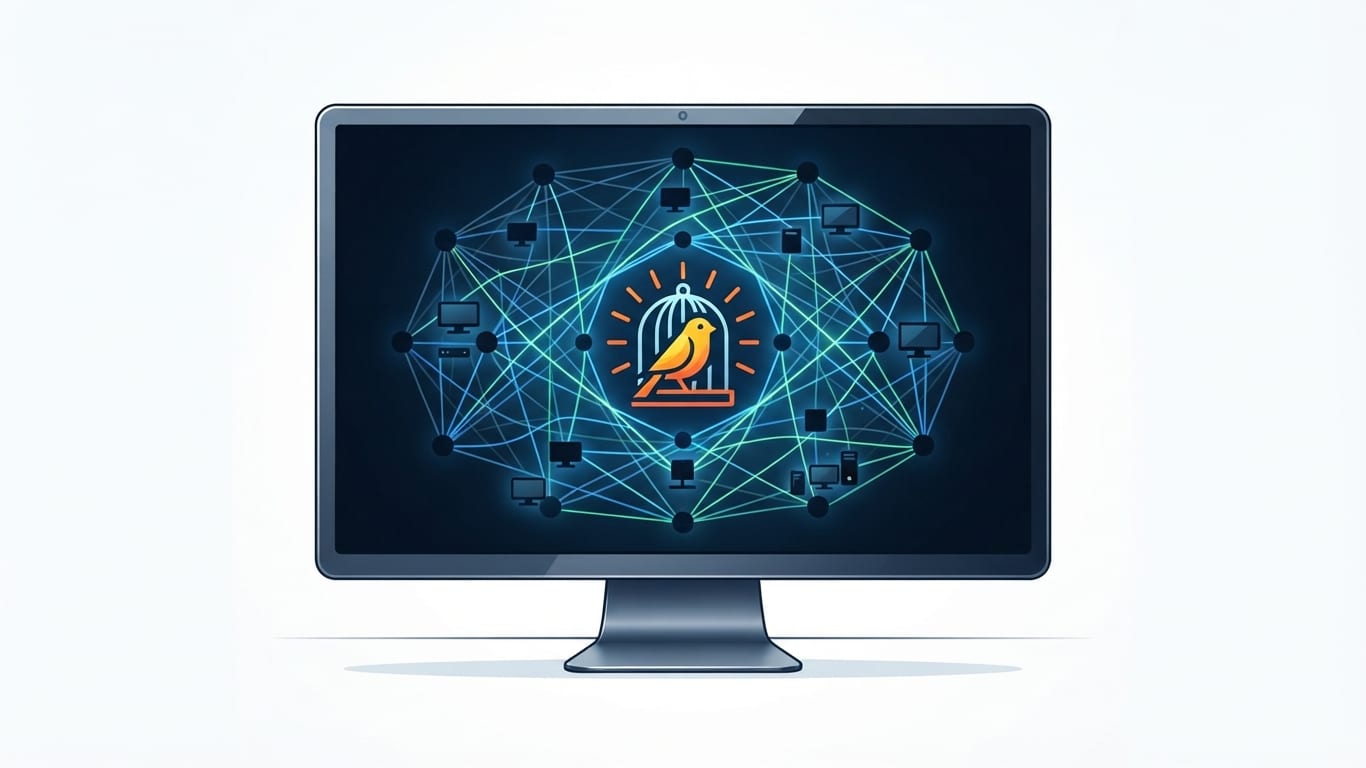
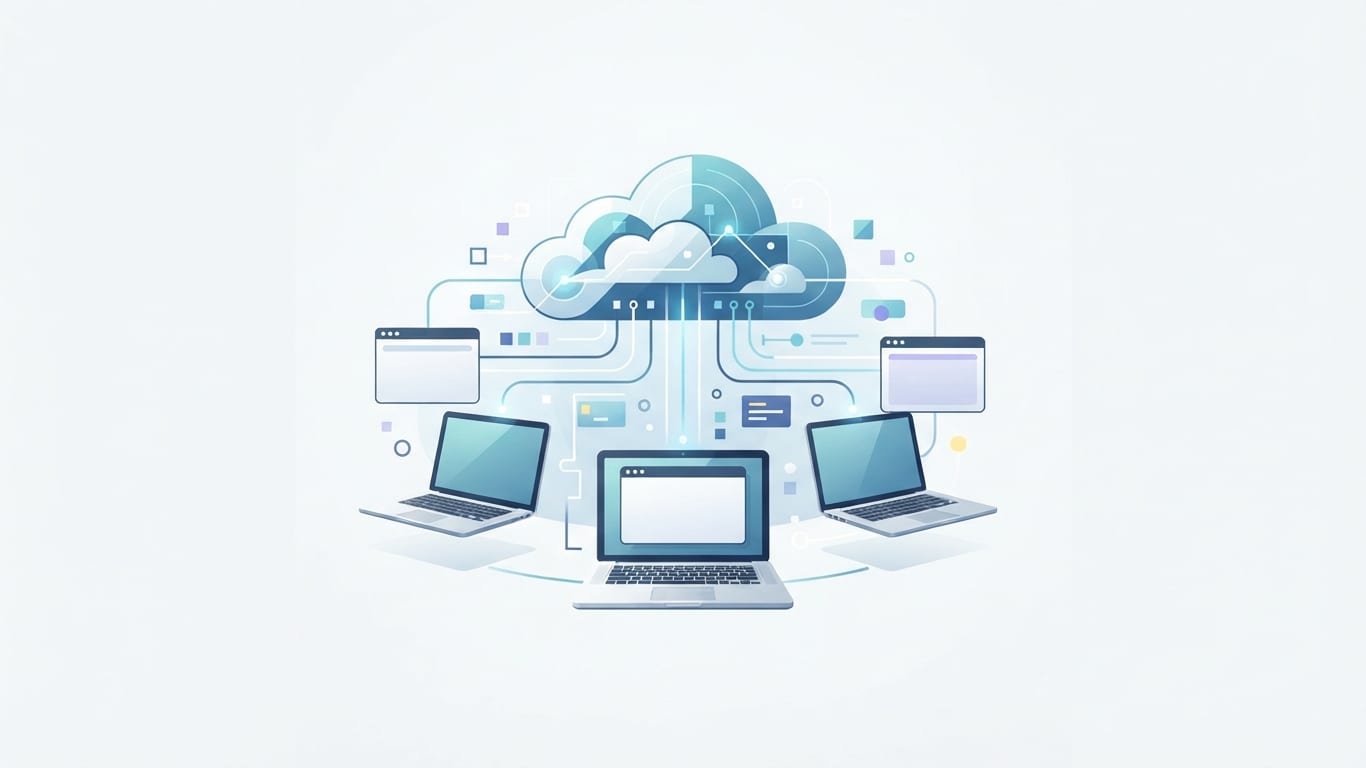
| Cloud server network connected to modern laptops |
In the traditional software paradigm, deploying a new application meant ordering physical compact discs or floppy disks, visiting individual user workstations, and manually running installation wizards while configuring local environment variables. This manual approach created immense friction whenever security patches or minor bug fixes needed to be distributed. IT departments spent countless hours traveling from desk to desk or pushing manual scripts over local area networks just to keep software updated. The advent of cloud-delivered models entirely eliminated this physical overhead, allowing organizations to provision tools instantly through a web browser.
Today, the software ecosystem relies heavily on these cloud-delivered models to reduce friction for end users. Everyday examples of SaaS products range from consumer tools like email clients and streaming apps (e.g., Netflix) to enterprise giants like Salesforce, Google Workspace, and Microsoft Azure cloud applications. Whether managing massive corporate databases or streaming personal entertainment, users rely on the same fundamental delivery mechanism. Organizations launching these systems often begin by exploring foundational development phases, as outlined in guides on What Is MVP Software Development: A Core Strategy Guide to validate their initial concepts before scaling infrastructure.
Furthermore, the democratization of software access has leveled the playing field for businesses of all sizes. Small startups can utilize the exact same enterprise-grade accounting, customer relationship management, and project tracking tools as Fortune 500 conglomerates without investing in expensive local server hardware. Because the barrier to entry involves a simple monthly subscription rather than an exorbitant upfront capital expenditure, organizations can experiment with different tools, pivot their technology stacks, and rapidly adapt to shifting market conditions with minimal financial risk.
Understanding Core Functionality and Infrastructure
Users typically sign in through a web browser or mobile/desktop application, while the provider handles backend hosting, maintenance, security, and updates. This division of labor shifts the technical burden away from the end user's internal IT department. According to cloud architects, most SaaS products use a multi-tenant architecture where a single instance of the software serves multiple customers securely, optimizing resources and lowering costs. This architecture ensures that computational resources are shared efficiently while maintaining strict data isolation between different clients.
In a multi-tenant environment, all subscribing organizations share the same underlying application logic, database structure, and server resources. Despite this shared foundation, advanced database sharding, row-level security policies, and cryptographic isolation guarantee that Company A cannot view or access the proprietary data of Company B. This approach contrasts sharply with single-tenant hosting models, where every individual client requires a dedicated virtual private server or physical machine. By pooling infrastructure resources across thousands or millions of users, SaaS providers achieve massive economies of scale, passing those cost savings down to consumers through lower subscription rates.
Under this architectural framework, the underlying code and database structures remain unified across the user base. When a developer pushes a performance patch or a security update, the entire user base receives the fix simultaneously. This contrasts sharply with legacy client-server models that demanded separate installations on individual workstations or local servers. By centralizing operations, providers maintain rigorous security standards and rapid response protocols for vulnerabilities across their entire deployment footprint.
Security in this centralized model is managed by dedicated, expert cybersecurity teams who monitor network traffic, perform continuous penetration testing, and implement robust encryption standards (such as TLS for data in transit and AES-256 for data at rest). Individual companies using the SaaS application often benefit from enterprise-grade security protocols that would be financially prohibitive to build and maintain on their own premises. Consequently, migrating workloads to a multi-tenant cloud ecosystem frequently enhances an organization's overall security posture while reducing internal compliance burdens.
The Mechanics Behind Modern Delivery Models
To understand how do saas products work, one must examine the intersection of cloud infrastructure and recurring billing logic. SaaS operates as a monetization business model using recurring payments (monthly or annually) alongside a cloud-hosted infrastructure model. Users authenticate their credentials through lightweight client interfaces, sending API requests back to centralized server farms. These servers execute business logic, process database queries, and return the rendered interface elements to the client device in real time.
The operational mechanics rely heavily on Asynchronous JavaScript and XML (AJAX), single-page application (SPA) frameworks, and microservices architecture. When a user interacts with a dashboard element—such as clicking a button to generate a sales report—the local browser does not need to reload the entire web page. Instead, it fires a lightweight JSON payload to an application programming interface (API) endpoint hosted in a cloud environment like Amazon Web Services (AWS), Google Cloud Platform (GCP), or Microsoft Azure.
This setup decouples software utility from hardware limitations. Because heavy processing occurs on remote servers rather than local hardware, users can access complex enterprise analytics or heavy data processing tools from modest laptops or mobile devices. When building these foundational frameworks, engineering teams frequently rely on insights from What Is MVP Software Development: A Core Strategy Guide to ensure their initial cloud architectures scale effectively under load.
Behind the scenes, auto-scaling groups and container orchestration tools like Kubernetes dynamically spin up additional server instances whenever user traffic spikes, and scale them back down during off-peak hours. This elasticity ensures optimal performance without wasting compute cycles. The recurring billing engine ties directly into this infrastructure usage, tracking account statuses, processing automated credit card charges, and automatically restricting or granting access privileges based on the current health of the subscription.
Software as a Product Versus Software as a Service
Discussions regarding is saas product or service often highlight a hybrid identity that blends traditional product ownership with ongoing utility delivery. According to technology economists, SaaS is described as both—the product is the software application itself, but it is delivered continuously as a service over the internet. Users do not own a static asset or a permanent digital artifact; instead, they purchase ongoing access to a continuously managed software environment.
In the traditional software industry, a product was treated much like a physical good: a buyer paid a large upfront sum to acquire a license, receiving a static version of the code that they could run indefinitely on their own hardware. The software vendor's responsibility largely ended at the point of sale, save for occasional paid upgrades or limited warranty patches. Conversely, a service implies an ongoing human or automated activity performed on behalf of a client, characterized by continuous labor, maintenance, and support.
This dual nature influences both legal agreements and financial accounting standards. Software companies treat development as product engineering, building distinct features, user interfaces, and workflows. Simultaneously, they treat delivery as an operational service, guaranteeing uptime, availability, and customer support through Service Level Agreements (SLAs). This blending redefines the boundary between manufacturing a software package and maintaining a living utility.
From an accounting perspective, this hybrid identity shifts revenue recognition from a single large lump sum at the time of purchase to deferred, ratable revenue recognized over the lifetime of the customer subscription. This recurring revenue model (often tracked via metrics like Annual Recurring Revenue or Monthly Recurring Revenue) provides businesses with predictable cash flows. It also alters corporate valuation models, placing heavy emphasis on customer retention, churn rates, and lifetime value rather than just raw unit sales.
 TechMediaArch.com TechMediaArch.com |
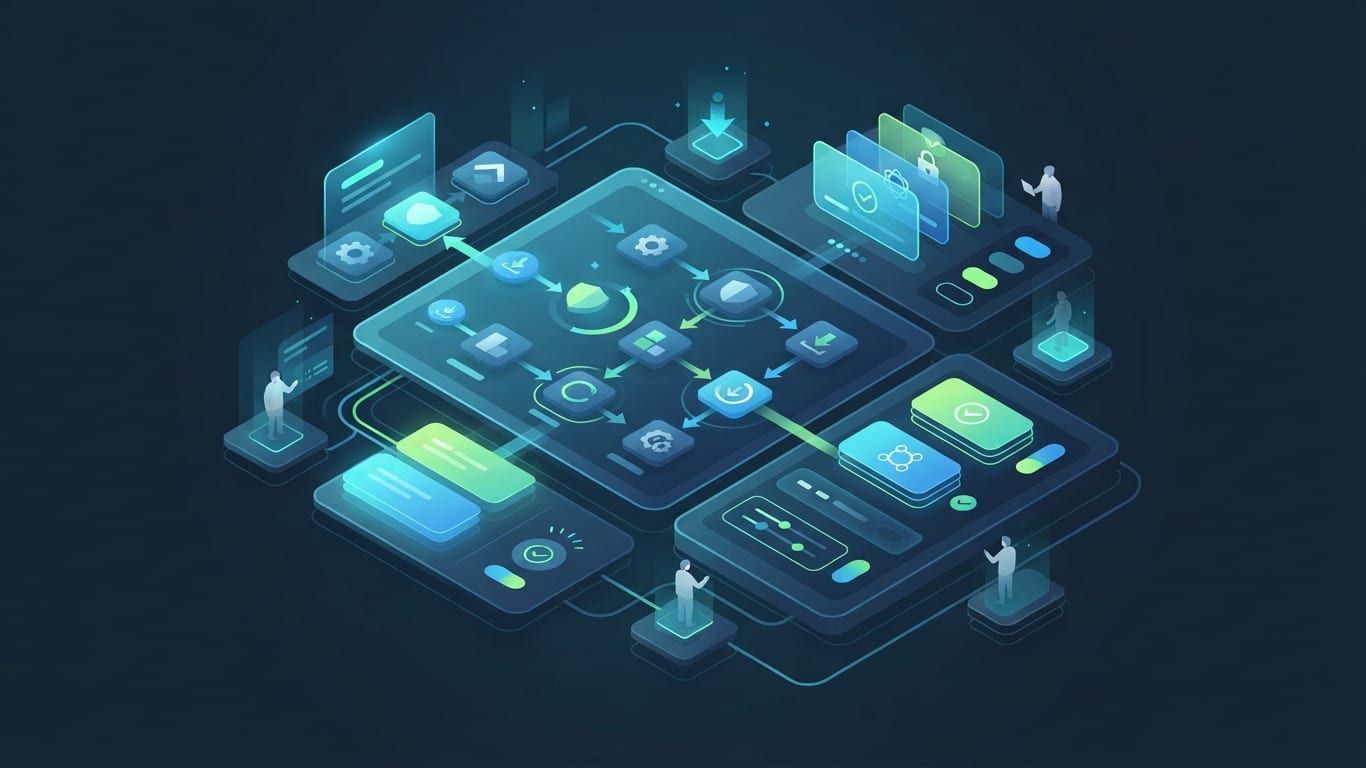
| Software subscription dashboard on a digital interface |
Pricing Structures and Scalability Mechanics
Monetization frameworks in this sector diverge significantly from traditional perpetual software licenses. Common SaaS pricing models include tiered plans, user-based ("per seat") pricing, usage-based fees, and free or "freemium" versions. These diverse monetization options allow organizations to match their software expenditures precisely to their current operational scale and active user counts.
Tiered pricing models group features into distinct packages—such as Basic, Professional, and Enterprise—allowing smaller teams to pay for foundational tools while larger corporations pay a premium for advanced security, custom integrations, and dedicated account management. User-based pricing charges a flat fee for every individual employee or administrator who accesses the platform. Usage-based pricing bills clients based on consumption metrics, such as the number of emails sent, gigabytes of data stored, or API calls executed. Meanwhile, freemium models offer a fully functional base tier at zero cost to build massive user acquisition funnels, converting a percentage of those free users into paid subscribers over time.
Furthermore, SaaS solutions allow customers to easily scale their use, features, or user counts up or down by transitioning between different pricing tiers or subscription levels. If a company hires fifty new employees, administrators can provision fifty new user seats instantly through a dashboard panel without contacting a sales representative. Early-stage teams planning these flexible monetization tiers often review strategies detailed in What Is MVP Software Development: A Core Strategy Guide to align their initial pricing experiments with product architecture.
This elasticity benefits both sides of the transaction. Customers avoid over-provisioning and never find themselves locked into expensive software licenses for seats they no longer utilize. Conversely, SaaS providers benefit from expansion revenue—often measured through net revenue retention rates—as successful client organizations naturally grow, add more team members, and upgrade to higher tiers as their internal computing needs expand.
Version Management and Automatic Updates
Traditional software distribution relied heavily on numbered major releases, service packs, and manual patch management cycles. By contrast, do saas products have versions in a very different way than legacy desktop applications. Unlike traditional software, it is rarely possible to purchase a perpetual license for a specific static version; vendors generally avoid maintaining multiple distinct software versions for clients.
In a legacy software environment, vendors often support three or four concurrent major versions of their product simultaneously, forcing engineering teams to backport critical security patches and bug fixes to older, legacy codebases. This fragmentation creates immense technical debt and slows down innovation. SaaS companies eliminate this overhead by enforcing a single-version truth policy. Every user interacts with the exact same production deployment at any given moment.
Instead of fragmented version histories, SaaS products feature automatic, seamless updates managed entirely by the provider, eliminating the need for users to manually download patches or major version installations. Engineers push continuous integration updates directly to the production environment. This ensures that every customer interacts with the exact same secure, up-to-date iteration of the software, drastically reducing fragmentation and support overhead for the provider.
Continuous deployment pipelines allow developers to push minor UI tweaks, performance enhancements, and security patches multiple times a day without causing downtime for active users. Because code changes are deployed incrementally, users rarely experience jarring transitions or massive learning curves associated with traditional multi-year upgrade cycles. Features evolve organically, ensuring that the software constantly adapts to modern security threats and workflow efficiencies.
Customer Support and Relationship Dynamics
Technical assistance in cloud environments goes far beyond fixing broken code or resolving installation errors. According to industry service standards, the definition of saas product support encompasses both basic troubleshooting and technical assistance, ensuring customers fully understand the software to drive product adoption and retention. Because customers can cancel subscriptions easily if they fail to derive value, support functions as a critical business engine.
In a perpetual license model, once a customer bought software, support was often viewed as a cost center to be minimized. In the SaaS subscription economy, support and customer success are primary drivers of business growth. If a subscriber experiences friction, fails to adopt key features, or encounters unresolved technical hurdles, they can easily cancel their subscription at the end of the billing cycle and migrate to a competitor. Consequently, support teams act as front-line retention specialists who proactively monitor user health scores and engagement metrics.
In B2B SaaS businesses, customer support extends past resolving technical issues to actively building long-term relationships and securing customer success. Leading SaaS support operations utilize omnichannel support systems, self-service knowledge bases, AI automation, and clear service-level agreements (SLAs) with fast response times. Teams often establish these support workflows early on, taking cues from What Is MVP Software Development: A Core Strategy Guide to ensure operational readiness scales smoothly alongside user growth.
Modern support ecosystems integrate ticketing systems, live chat widgets, community forums, and comprehensive documentation libraries into a unified dashboard. Artificial intelligence chatbots handle routine inquiries—such as password resets, billing questions, and basic navigation queries—instantly, freeing human support engineers to focus on complex integration issues, strategic guidance, and technical troubleshooting. This multi-layered approach ensures high satisfaction rates, minimizes customer churn, and maximizes the long-term profitability of the subscriber base.
FAQ
What is a SaaS product company?
A SaaS product company provides software on a subscription basis, hosting applications in the cloud for customers to access via the internet without local installation. These firms manage all backend hosting, security, and updates centrally.
How do SaaS products work technically?
Users sign in through a web browser or mobile application while the provider handles backend hosting, maintenance, security, and updates on remote servers. Most products utilize a multi-tenant architecture where a single software instance serves multiple customers securely.
Is SaaS considered a product or a service?
SaaS is described as both—the product is the software application itself, but it is delivered continuously as a service over the internet. Users purchase ongoing access rather than owning a static asset.
Do SaaS products have distinct software versions?
Unlike traditional software, it is rarely possible to purchase a perpetual license for a specific static version, and vendors generally avoid maintaining multiple distinct software versions for clients. Updates are applied automatically and seamlessly by the provider.
What is included in SaaS product support?
SaaS product support encompasses both basic troubleshooting and technical assistance, ensuring customers fully understand the software to drive product adoption and retention. In B2B environments, this support extends to building long-term relationships and securing customer success.