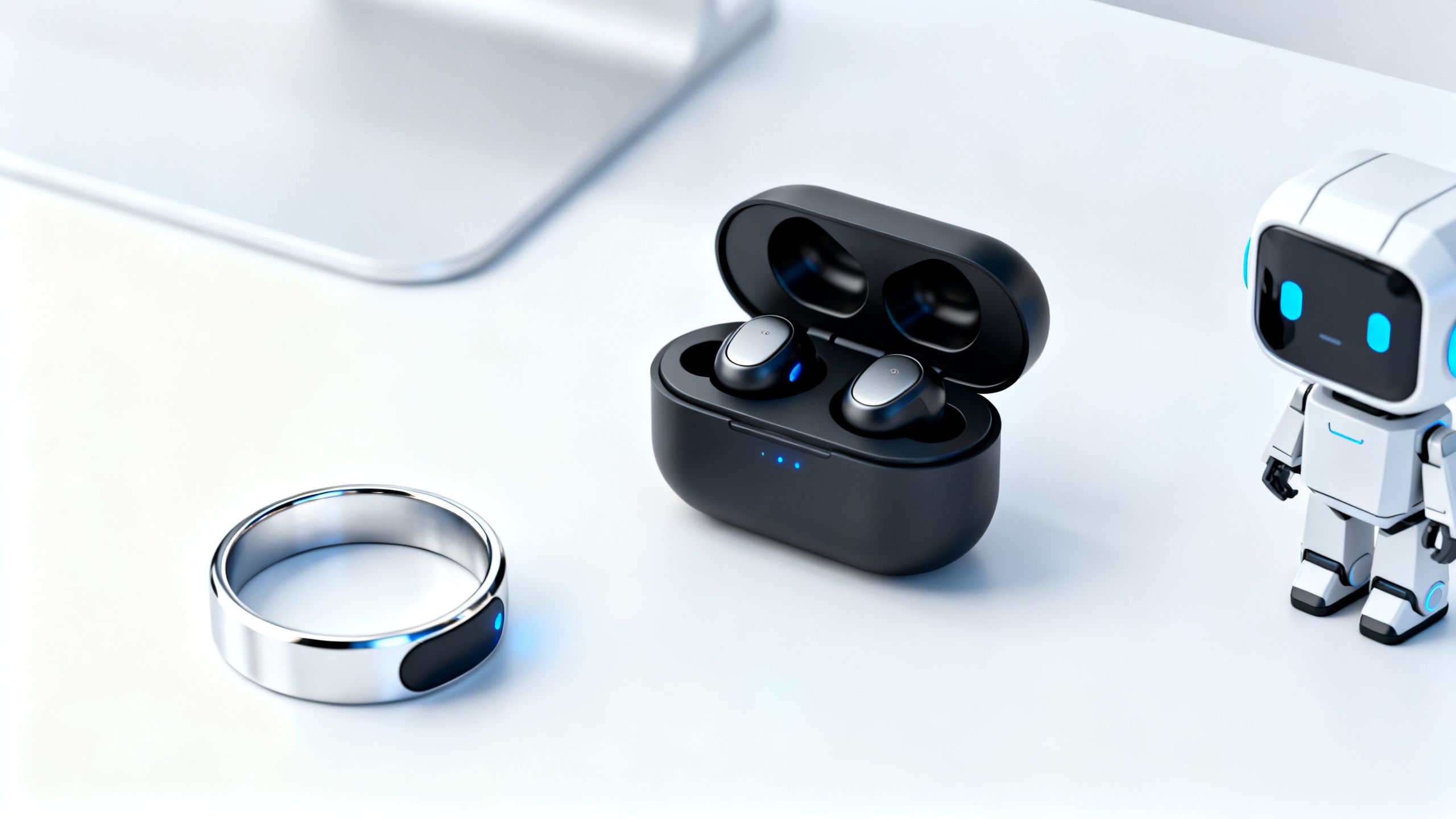
Forget waiting for the future. The latest video from Tech Media Arch, "15 AI Devices You Can Buy Right Now," proves that artificial intelligence has already moved out of the cloud and into our homes, hands, and even onto our clothes. These aren't just concepts; they're real products changing how we live, work, and interact.
The Technical Breakdown
The video showcases a huge range of hardware, but a few key trends stand out. We're seeing a massive push away from screens. The Humane AI Pin, for example, uses voice commands and a laser projector that displays information on your palm. It's a bold attempt at ambient computing, where the tech fades into the background.
Then you have devices like the Ploud Note Pro, which is essentially a pocket-sized meeting assistant. It uses advanced microphones and AI to transcribe conversations, separate speakers, and generate summaries on the fly. This isn't just recording; it's active information processing. It's part of a larger trend of specialized AI tools that revolutionize your workflow.
Why This Development Matters
This shift to physical AI hardware is significant. It's about making technology more intuitive and integrated into our physical world. Instead of us having to adapt to the machine (by typing on a keyboard or tapping a screen), the machines are learning to adapt to us.
Devices like the SwitchBot Kero H1, a humanoid robot that can pick up items and open doors, show a move towards general-purpose assistants that can physically help around the house. This is a huge step up from a smart speaker that just answers questions. The goal is to embed intelligence into our environment, making our lives easier without constant screen time. This is similar to how new tools are making it easier to turn simple prompts into studio-quality videos, lowering the barrier to complex tasks.
 TechMediaArch.com
Key Takeaways from the Video
Hardware is the New Frontier: AI is breaking out of software and into tangible, physical products you can hold and interact with.
The Screen is Fading: Many of these new devices prioritize voice, gesture, and even projection-based interfaces over traditional screens.
Specialization is Key: From AI-powered sleep masks to pet translators, devices are being designed to solve very specific, everyday problems with focused intelligence.
Automation Goes Physical: We're moving from automating digital tasks to automating physical ones, like cooking with the Cosy Time Lumo or household chores with the Ebo Max Family Bot. This simplification of complex processes is also seen in content creation, where you can now make 1,000 AI podcast videos from a single image.
The Future of AI Devices
What does this all point to? A future where AI is an ambient layer in our lives. These devices show that the focus is on creating a more connected, efficient, and less screen-dependent existence. As the technology becomes more powerful and accessible, like the ability to create 15-minute videos with free AI, we can expect to see even more innovative hardware that seamlessly blends the digital and physical worlds. The future isn't coming; it's already for sale.
Frequently Asked Questions
What are some examples of physical AI hardware currently available to purchase?
The latest video from Tech Media Arch showcases a wide variety of tangible artificial intelligence hardware that consumers can buy today. These products range from wearable technology and pocket-sized assistants to humanoid robots and specialized household helpers. They are designed to integrate intelligence directly into the physical environment rather than remaining trapped inside software or screens.
How does the Humane AI Pin display information without using a traditional screen?
The Humane AI Pin relies on voice commands to interact with the user and incorporates a laser projector to display information directly onto the palm. This approach represents a deliberate push toward ambient computing, where the technology fades smoothly into the background of everyday life. By eliminating the need for a standard display, it offers a novel way to access digital data.
What function does the Ploud Note Pro serve as a pocket-sized assistant?
The Ploud Note Pro functions as a portable meeting assistant designed to streamline professional workflows through advanced audio processing. It utilizes sophisticated microphones alongside artificial intelligence to transcribe spoken conversations, distinguish between different speakers, and instantly generate concise summaries. This capability transforms basic audio recording into active, real-time information processing.
What makes physical AI assistants like the SwitchBot Kero H1 different from traditional smart speakers?
While a standard smart speaker is typically limited to answering verbal questions, general-purpose physical assistants are built to interact directly with the physical world. For example, a humanoid robot can perform tangible physical tasks such as picking up items and opening doors around the house. This represents a major advancement in making technology adapt to human environments rather than requiring humans to use keyboards and screens.
How are modern AI gadgets changing user interfaces away from traditional screens?
Many of the newly developed hardware products actively prioritize alternative interaction methods over conventional displays, leaning heavily into voice controls, physical gestures, and projection-based interfaces. This design philosophy aims to reduce constant screen time and create a much more intuitive user experience. The ultimate goal is to embed digital intelligence seamlessly into the ambient environment.