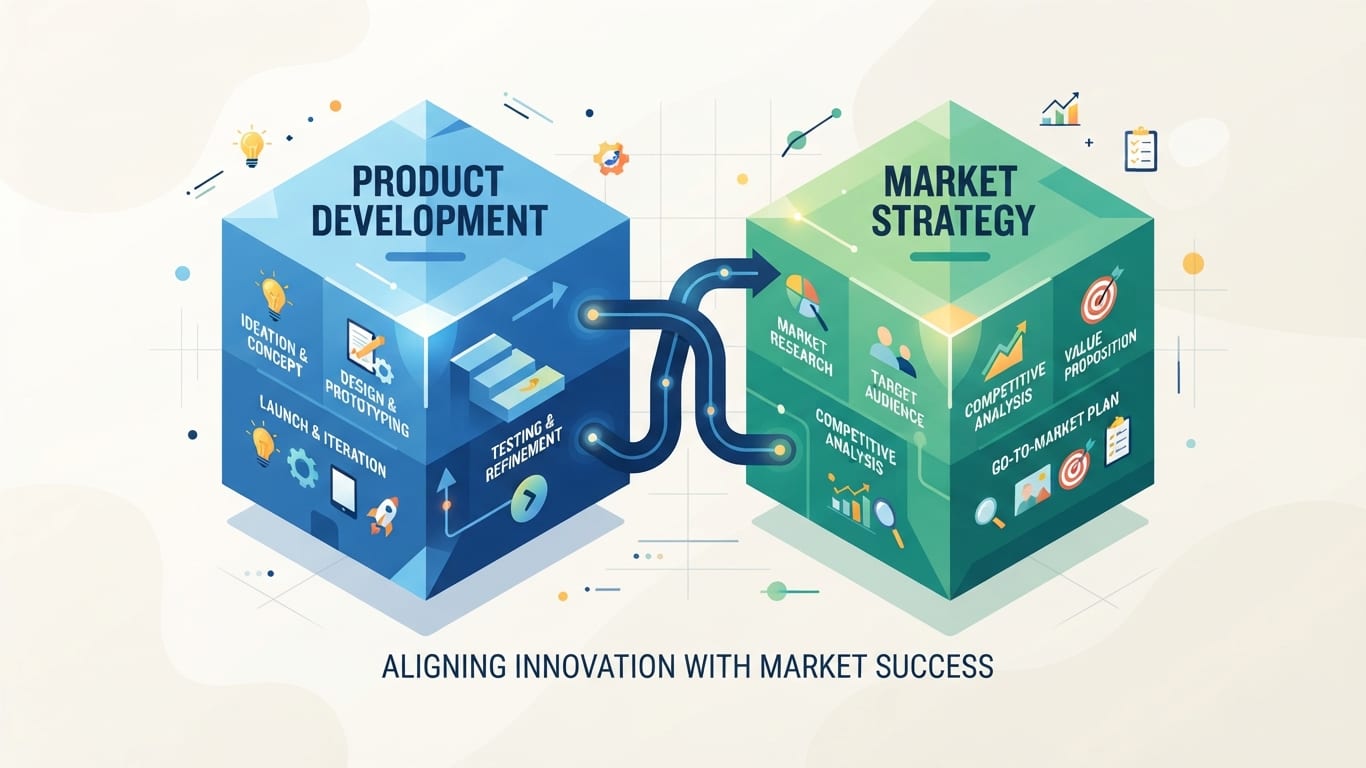
Understanding the Minimum Viable Product in Technology
In software development, MVP stands for Minimum Viable Product. When people ask what is mvp software development, industry experts point to a foundational product strategy designed to test assumptions before committing large budgets. Approximately 72% of businesses follow the MVP approach when developing new products. This methodology has become an industry standard for engineering teams aiming to launch digital tools efficiently and avoid the common traps of over-engineering.
 TechMediaArch.com TechMediaArch.com |
| Developers collaborating on MVP wireframes and product planning |
Coined by Frank Robinson and popularized by Eric Ries in his book The Lean Startup, an MVP is defined as the version of a new product that allows a team to collect the maximum amount of validated learning about customers with the least effort. Instead of building every imagined feature on day one, creators focus on delivering core utility. This strategic restraint helps organizations navigate uncertain markets without draining their capital reserves.
The core philosophy centers on the idea that human intuition regarding software demand is frequently wrong. Stakeholders often fall in love with complex features that end-users do not actually care about. By shifting the focus from building a complete vision to testing a specific hypothesis, teams remove ego from the equation. Every line of code written in an MVP phase serves a strict experimental purpose: to verify whether a genuine market need exists for the proposed solution.
Furthermore, adopting this framework changes how organizations view project failure. In a traditional development cycle, discovering that users do not want a product after a year of heavy investment is catastrophic. In contrast, an MVP approach treats early negative feedback or low engagement not as a failure, but as low-cost, high-value data. This empirical feedback allows leaders to pivot their product direction before burning through their entire runway.
Origins and Core Definition of the Strategy
The concept emerged during a period when tech startups frequently failed after spending years building software nobody wanted. Eric Ries and Frank Robinson shifted the industry focus toward iterative learning. By deploying a stripped-down version of a platform, companies could observe real user behavior rather than relying on focus groups or theoretical market research. Consumers often say one thing in surveys but behave entirely differently when interacting with live software.
Understanding what does mvp in software development mean requires looking at the balance between minimalism and viability. An MVP contains only the essential, core features required to function, solve a primary user problem, and satisfy early adopters. These foundational elements must be robust enough to deliver actual value, ensuring that initial testers can complete their tasks and provide meaningful feedback to the product team. If a product is too minimal to solve the user's core problem, it ceases to be viable and yields corrupted data.
The concept of "viability" is frequently misunderstood by technical teams who confuse it with high polish. An MVP does not need to look like a finished enterprise product, nor does it need to include every conceivable security or administrative control on day one. It must simply fulfill its singular promise to the user securely and reliably. For instance, if an application aims to help users book local dog walkers, the MVP only needs to connect a dog owner with a walker and process a single payment method. It does not need custom user profiles, messaging history search, or multi-tier loyalty programs.
By enforcing this discipline, engineering teams prevent scope creep—the gradual expansion of project requirements that delays delivery dates and inflates budgets. When every feature must justify its inclusion by directly answering a core user problem, the product backlog stays lean and focused.
Primary Objectives and Risk Mitigation
The main purpose of MVP development is to test product hypotheses, mitigate financial risk, and validate market demand before investing heavy resources into full-scale building. Software engineering projects carry high failure rates, and writing thousands of lines of unvalidated code can bankrupt a firm. By scaling down initial requirements, organizations protect their balance sheets and preserve capital for future iterations.
Validating market demand early allows engineering groups to pivot or persevere based on empirical evidence. If early adopters reject the core premise, the company saves months of development time and significant capital. This approach aligns closely with standard operational frameworks detailed in resources covering Product Roadmap vs Backlog: Key Differences Explained, where prioritization dictates immediate engineering focus and helps teams manage resource allocation effectively.
Financial risk mitigation goes beyond saving on initial development costs. Building an overly complex product upfront also locks an organization into a specific architectural path. If the market shifts or customer needs change, refactoring a massive, unvalidated codebase is exponentially harder than modifying a lean MVP. Keeping the software footprint small provides organizational agility, enabling developers to rewrite or restructure modules quickly as user feedback rolls in.
Moreover, early user engagement builds an organic community of brand advocates. Early adopters who participate in shaping a product often feel a sense of ownership and loyalty toward the platform. These users are typically more forgiving of bugs or missing features, and their direct insights guide the product roadmap far more accurately than internal brainstorming sessions ever could.
Distinguishing MVPs from PoCs and Prototypes
Confusion often arises between various early-stage product artifacts. An MVP is distinct from a Proof of Concept (PoC)—which verifies technical feasibility—and a Prototype, which is an interactive layout demonstrating design and user flows without functional code. While a PoC stays internal to answer whether a technical architecture can work, an MVP goes directly to real users.
A Proof of Concept is usually a small, internal exercise executed by engineers to answer a specific technical question. For example, a team might build a PoC to determine whether their servers can handle real-time data synchronization across multiple geographic regions. A PoC is rarely pretty, often discarded once the technical question is answered, and never shown to end consumers.
Similarly, a prototype is non-functional and meant strictly for visual and interaction testing. It features no backend logic, database connections, or API integrations. Tools like Figma or Adobe XD allow designers to string together screens so stakeholders can click through a user journey. While prototypes are invaluable for testing UX flows and design aesthetics before writing code, they cannot execute real transactions or collect actual usage data from live customers.
An MVP, by contrast, is a working piece of software deployed in a live environment, capable of executing core transactions and gathering usage data from actual customers. It bridges the gap between technical feasibility (PoC) and visual design (Prototype), wrapping them into a functional package that solves a real-world problem for a paying or registered user.
 TechMediaArch.com TechMediaArch.com |
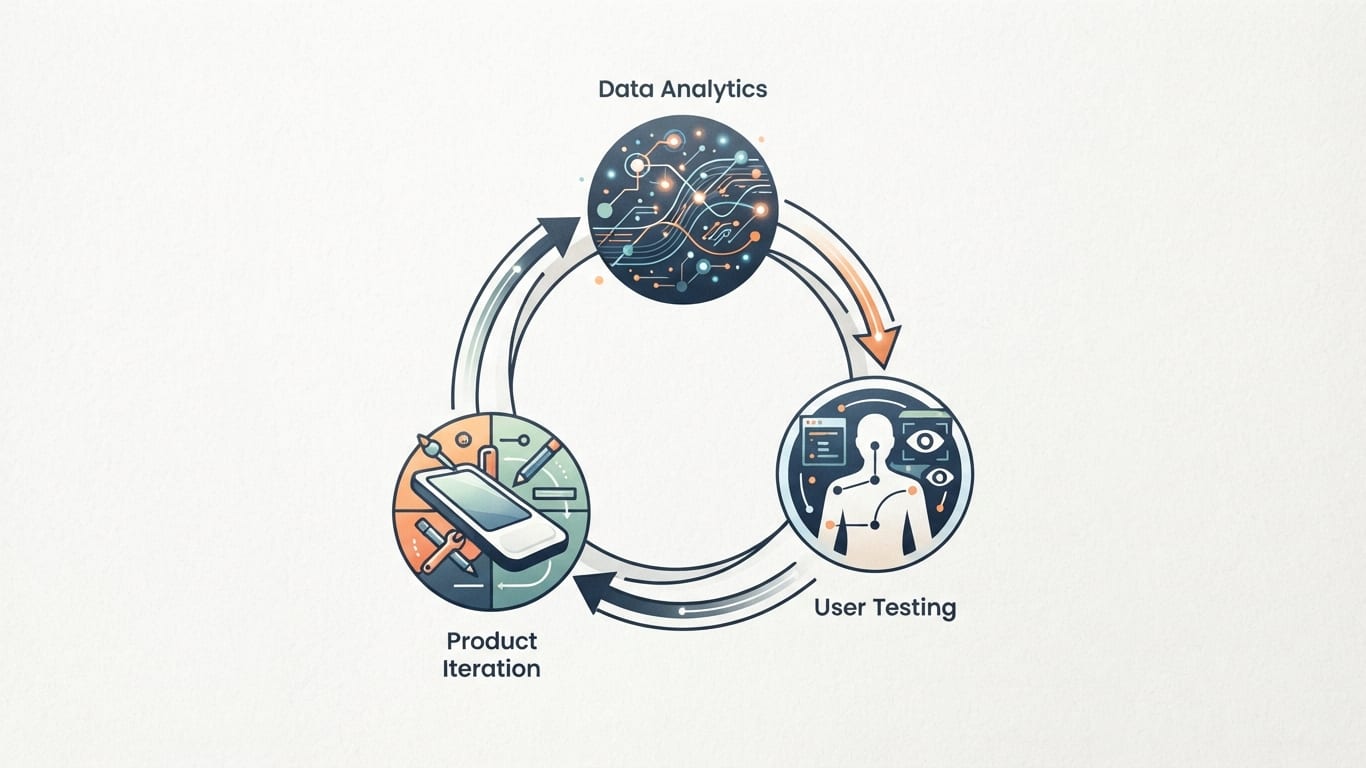
| Minimalist graphic showing the software feedback and iteration loop |
SaaS MVP Development and Resource Requirements
SaaS MVP development is the process of building a simplified Software-as-a-Service product carrying only features needed to validate a core business idea and establish product-market fit. Software-as-a-service platforms require careful attention to multitenancy, subscription billing, and user access controls, even in their earliest iterations, to ensure the business model can function correctly.
Typical timelines for building a SaaS MVP range from 2 to 6 months (or roughly 8 to 16 weeks). Meanwhile, the cost of developing a software or SaaS MVP typically ranges from $15,000 to $180,000+, depending on complexity. These figures fluctuate based on geographical talent pools, UI/UX requirements, and backend architectural demands. A simple single-feature SaaS tool with basic authentication will sit on the lower end of the timeline and budget spectrum, while an enterprise-facing SaaS MVP requiring complex integrations will demand significantly more time and capital.
Budgeting for a SaaS MVP requires careful allocation across several key areas:
- Discovery and Planning: Defining user stories, mapping journeys, and establishing technical requirements.
- Design (UI/UX): Creating wireframes and interface layouts that ensure intuitive navigation for early adopters.
- Core Engineering: Writing frontend and backend code to support the primary user flow and database operations.
- Quality Assurance: Testing the software across target devices and browsers to eliminate critical bugs before launch.
- Deployment and Analytics: Setting up cloud infrastructure and event-tracking software to monitor user behavior.
Controlling scope creep during this window is critical to staying within the 2-to-6-month timeline. Engineering teams must ruthlessly cut "nice-to-have" features that do not directly support the core value proposition.
The Step-by-Step MVP Development Process
A standard MVP development process starts with a discovery phase to identify the core target audience, define user pain points, and map out a single primary user journey. Product managers must ruthlessly eliminate peripheral feature requests during this phase to keep the scope tight and manageable for developers. This initial research ensures that the entire engineering team understands who they are building for and what specific problem they are solving.
Subsequent process steps generally include designing UX/UI wireframes or clickable prototypes, developing the backend/frontend, running QA testing, and deploying analytics tools. Cross-functional alignment during these stages ensures that engineering, design, and business goals remain synchronized. Similar structural dependencies are frequently explored in discussions regarding Product Management vs Product Marketing: Key Differences, highlighting how collaborative planning prevents disjointed feature rollouts.
During the development phase, engineering teams often lean on pre-built components, open-source libraries, and cloud-managed services to accelerate delivery. Writing custom code for standard utilities like user authentication, payment processing, or database management is an unnecessary waste of time for an MVP. Utilizing established third-party services lets the team focus their custom development efforts entirely on the unique features that differentiate their product in the market.
Once development and QA testing are complete, the MVP is deployed to a live production environment. However, launch day is not the finish line; it is the starting point for active data collection and user observation. The engineering and product teams must be prepared to monitor system stability and respond rapidly to early user feedback.
Real-World Examples of Successful Software MVPs
History provides notable instances of tech giants that started with remarkably simple initial offerings. Famous early software MVP examples include Dropbox (which initially validated interest using just a 3-minute explanation video) and Spotify. Drew Houston did not write the entire file-synchronization engine before pitching Dropbox; he created a demonstration video that proved massive consumer demand and validated the core premise before heavy capital was spent on complex desktop client engineering.
Spotify similarly launched with a very narrow desktop application focused strictly on low-latency music streaming in a single European market. Instead of trying to secure global music licensing agreements for millions of tracks across every possible device right away, Spotify proved its core hypothesis: that users would stream music instantly from the cloud rather than download files illegally if the playback experience was fast and seamless. This initial traction gave them the leverage needed to negotiate with major record labels and expand their infrastructure.
Another classic example is Zappos, where the founder initially tested online shoe sales by taking photographs of shoes in local stores, posting them online, and manually buying and shipping them when customers placed orders. He did not build automated inventory systems or warehouses until the basic market demand was thoroughly proven. These examples demonstrate that an MVP does not always require complex software code; sometimes, the best MVP is a manual process or a simple media asset that tests whether customers want the proposed solution.
Best Practices for Launching and Measuring Success
Best practices dictate avoiding vanity metrics like raw downloads or sign-ups, focusing instead on core activation, retention, and post-launch user feedback loops. When teams celebrate high initial download numbers without tracking active daily usage, they risk misinterpreting market interest. A high volume of sign-ups means little if users abandon the platform after a single session and never return.
Engineers and product leads must integrate event-tracking tools prior to launch to monitor how users interact with the primary feature set. Key metrics to monitor include:
- Activation Rate: The percentage of users who complete the primary onboarding flow and experience the core value proposition.
- Retention Rate: How frequently users return to the application over days, weeks, and months after their initial visit.
- Task Completion Time: How long it takes a user to achieve their primary goal within the software, indicating UX efficiency.
- Feedback Sentiment: Qualitative data gathered from support tickets, direct interviews, and in-app surveys.
Gathering qualitative feedback through direct user interviews complements quantitative data, guiding the iterative updates that follow the initial release. By combining hard event data with direct user conversations, product teams can diagnose why users drop off and make informed decisions about which features to build next.
FAQ
What is MVP software development?
MVP software development is the practice of building a new application with just enough core features to satisfy early users and test product hypotheses. This approach minimizes financial risk and development time by focusing strictly on primary user problems. Companies use the resulting data to guide future feature expansions.
What does MVP in software development mean?
In software development, MVP stands for Minimum Viable Product. It represents the earliest functional release of a digital product that delivers core value to customers while consuming the least amount of engineering effort. The acronym highlights the balance between keeping a product minimal and ensuring it remains viable in the market.
What is MVP development for startups?
MVP development for startups is a risk-mitigation strategy that lets founders test business concepts in the real market before spending heavy capital on full-scale software engineering. Approximately 72% of businesses follow this approach to validate market demand early. It prevents companies from building extensive codebases that do not align with customer needs.
What is SaaS MVP development?
SaaS MVP development involves creating a simplified Software-as-a-Service application that contains only the features required to validate a core business idea. Typical timelines for building such a product range from 2 to 6 months, with costs varying based on architectural complexity. The goal is to establish product-market fit quickly and efficiently.
What is MVP product development process?
The MVP product development process begins with a discovery phase to identify user pain points and define a single primary user journey. Subsequent steps include designing wireframes, building the frontend and backend, conducting quality assurance, and integrating analytics tools. This structured workflow ensures teams collect maximum validated learning with minimal effort.