Defining the Product Roadmap
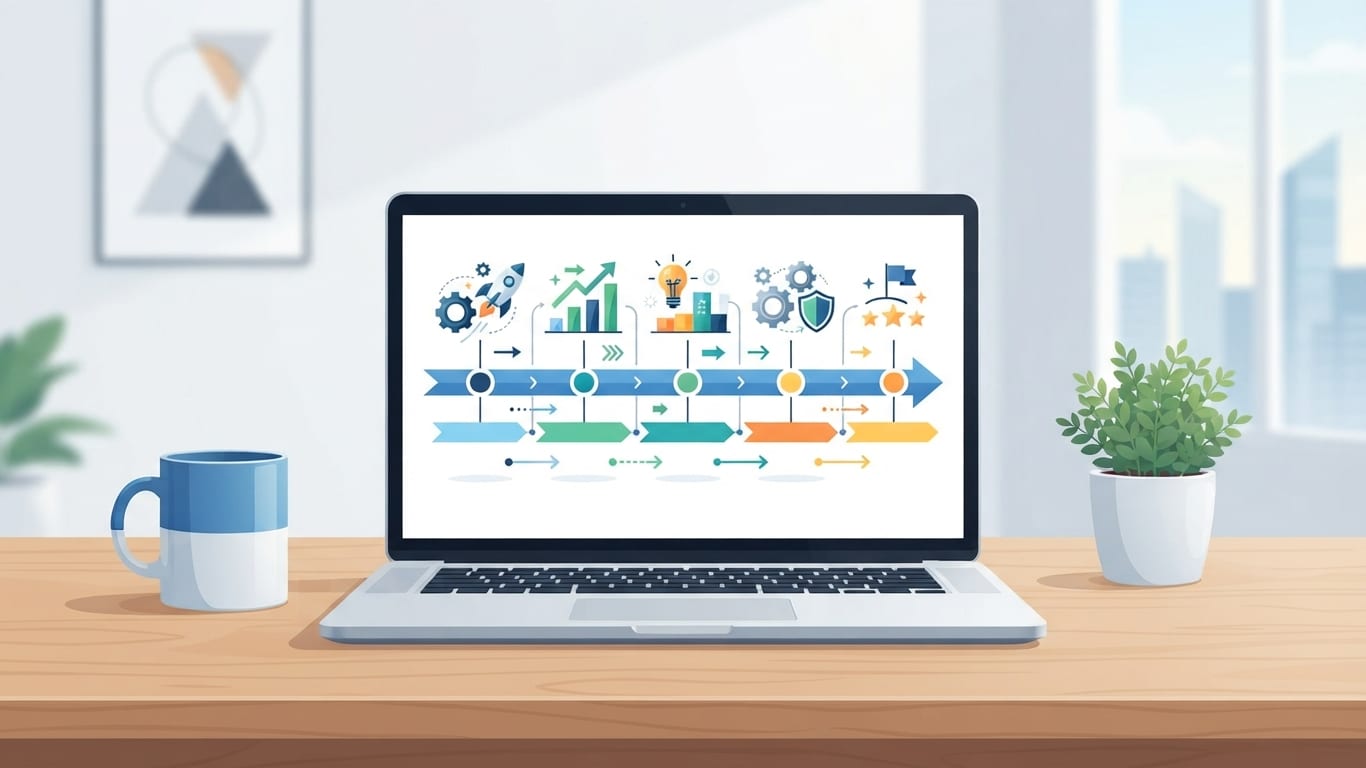
A product roadmap is defined as a shared source of truth outlining the vision, direction, priorities, and progress of a product over time, according to Atlassian. This visual tool serves to map out product offerings and communicate the why and what behind what is being built, as noted by ProductPlan.
 TechMediaArch.com TechMediaArch.com |
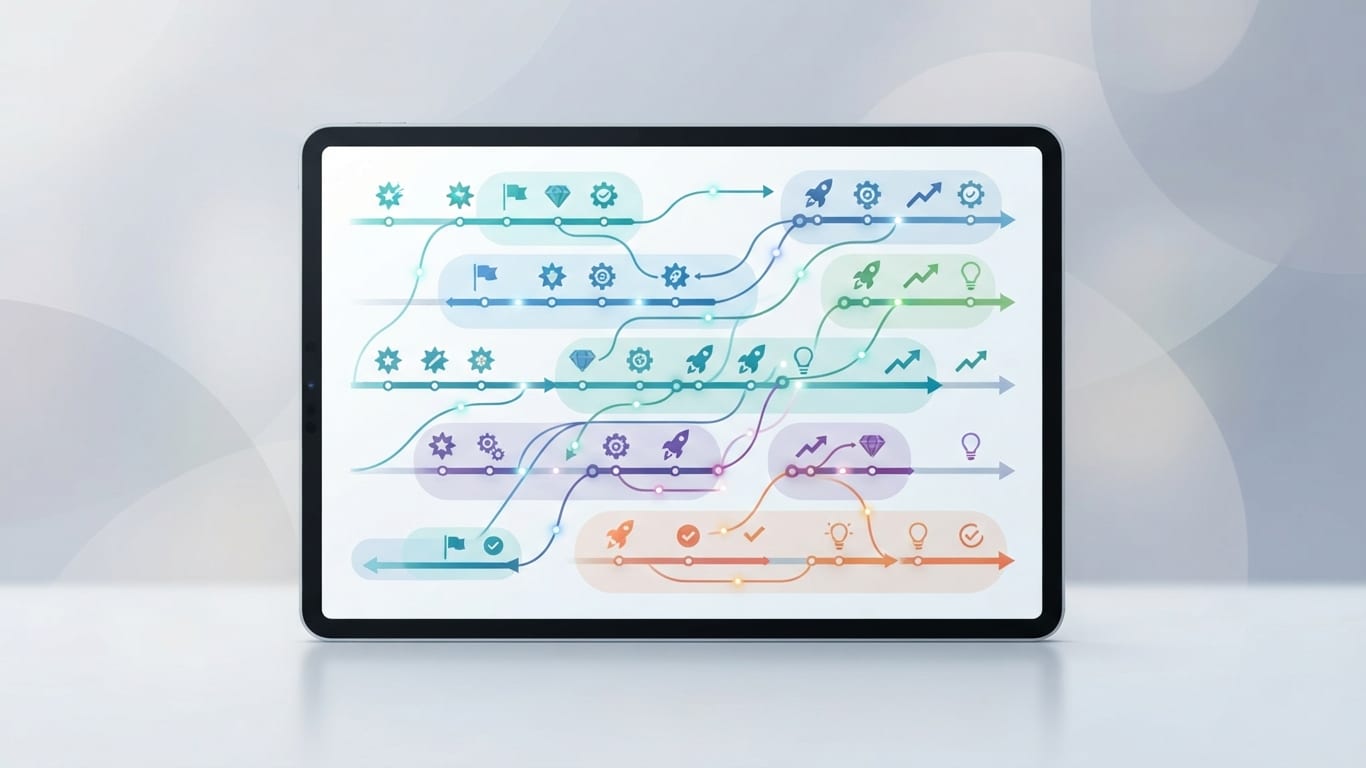
| Digital product roadmap displayed on a tablet screen |
Product roadmaps function as a plan of action for product managers to outline a product direction, key features, timelines, and goals for stakeholders, according to Amplitude. A general product roadmap template aligns cross-functional teams like executives, developers, and go-to-market leaders around a shared product vision and features, notes Airtable.
Documenting upcoming milestones prevents scope creep and keeps development squads focused on core deliverables. Stakeholders review these visual timelines to understand delivery schedules without diving into raw engineering tickets.
Communicating future progress clearly helps customer success departments prepare educational materials ahead of major releases. Sales teams leverage the same timeline data to close enterprise deals with accurate feature availability dates.
Strategy Versus Roadmap
Understanding the difference between product roadmap and strategy requires looking at how goals are structured over time.
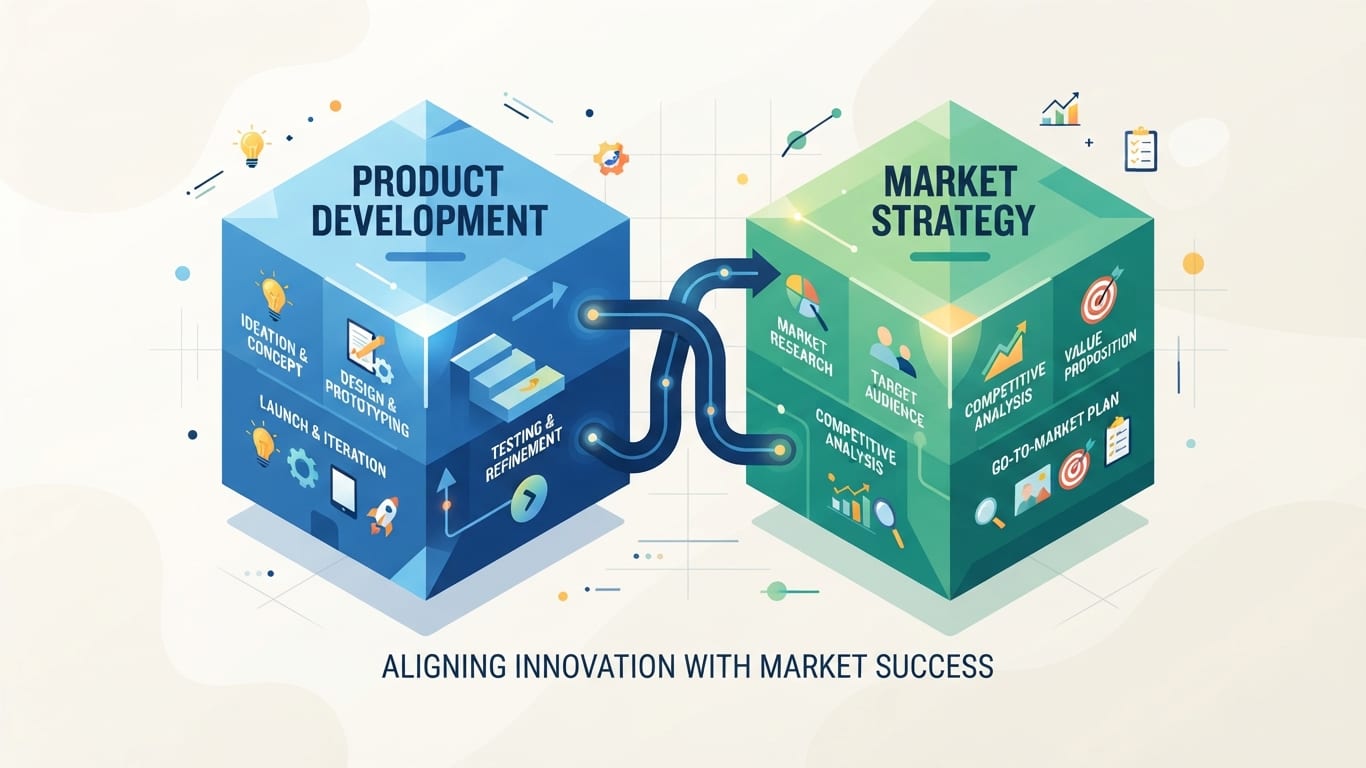
According to UserVoice, a product strategy defines the general direction and goals of a product, representing where you want to go and why, whereas a product roadmap details the high-level steps and timeline required to carry out that strategy.
Fygurs points out that product strategy answers foundational questions including who the product is built for, what customer problem is solved, and how the company will win against alternatives. Furthermore, a product strategy should remain stable and change no more than once or twice a year to avoid becoming a series of reactive quarterly pivots.
When executing these plans, teams often evaluate priorities alongside technical execution steps outlined in resources like the What Is MVP Software Development: A Core Strategy Guide to ensure initial releases match the long-term vision. Engineering managers track progress against roadmap milestones to verify that strategic intent translates into functional software.
Every roadmap item must trace back to the primary customer problems identified in the product strategy.
Core Roadmap Formats and Templates
Product teams utilize different structures to communicate priorities depending on their audience and planning horizon. The popular Now / Next / Later roadmap format, invented by Janna Bastow according to the Agile Alliance, focuses on immediate priorities, near-term plans, and future opportunities.
Productboard outlines two additional formats commonly deployed across mid-sized and enterprise companies:
- An objectives timeline roadmap allowing larger organizations to map broad business goals and product direction over two to three quarters rather than focusing strictly on output.
- A release timeline roadmap letting product managers communicate near-term features and targeted timeframes for app versions or monthly bug fixes to sales and customer success teams.
- A general cross-functional template aligning executives, developers, and go-to-market leaders around a shared product vision and features.
Early-stage startups often prefer flexible horizon frameworks, while established enterprises rely on rigid release timelines.
Quarterly objective formats help executive leadership evaluate resource allocation across major product lines. Department heads review multi-month plans to ensure engineering capacity matches company revenue targets.
Consistent visualization standards enable leadership to compare progress across different software applications easily.
Planning in Jira
Many software development teams manage their scheduling directly inside enterprise tracking environments. Atlassian explains that to use a roadmap in Jira, users open their project, click Timeline or Roadmap in the sidebar, and click Create Epic to start building out roadmap items.
In Jira timeline view, users can assign start and due dates to epics, where the length of the bar correlates directly with the scheduled timeframe, according to Atlassian. Additionally, Jira timelines include built-in filters allowing teams to search for keywords and filter work items by assignee, status, label, work type, versions, or components.
Platform administrators often evaluate whether they can create a product roadmap in Jira by reviewing native capability lists and plugin ecosystems. Standard cloud and data center configurations support these visualization needs out of the box without requiring external drawing software.
Tracking epics visually helps engineering leads spot scheduling conflicts before they impact delivery dates. Overlapping bars highlight resource bottlenecks where developers are assigned to multiple high-priority tasks simultaneously.
Filtering timeline views allows product managers to present tailored status updates to specific stakeholder groups. Engineering directors can review technical components, while executive sponsors examine high-level epic durations.
Connecting epics directly to underlying user stories ensures that the roadmap remains tightly synchronized with daily developer activity. Manual status updates become obsolete when visual timelines draw live data from completed sprints.
Managing project dependencies inside the tracking software prevents teams from starting features before prerequisite technical work finishes. Visual dependency lines clarify the strict sequencing required for complex software architectures.
 TechMediaArch.com TechMediaArch.com |
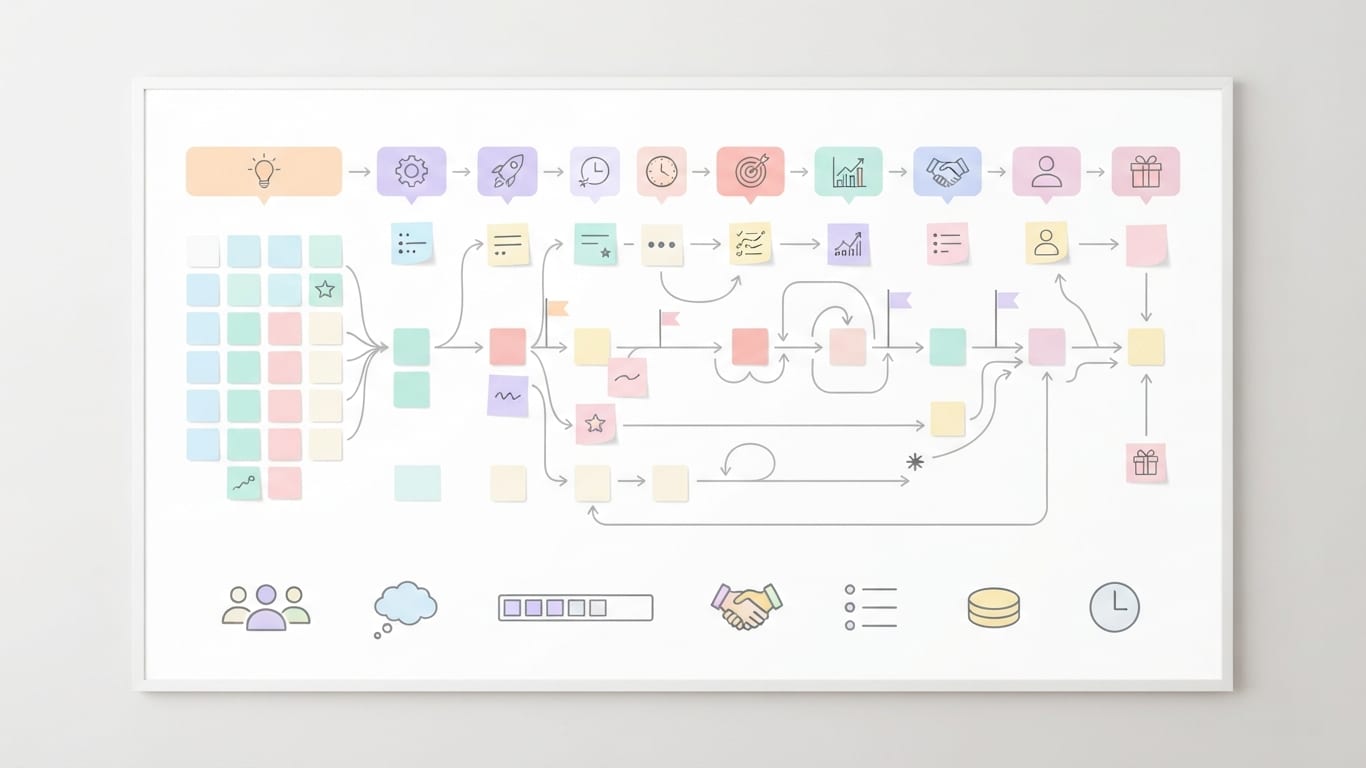
| Team collaboration and planning on a strategy whiteboard |
Executing a Product Management Roadmap Example
A practical product management roadmap example typically integrates user feedback, engineering constraints, and executive milestones into a single interface. These examples demonstrate how teams translate abstract company goals into concrete development cycles.
When reviewing a typical product management roadmap example, managers look for clear demarcations between immediate engineering sprints and future exploratory research. Collaborative planning ensures that go-to-market departments, technical writers, and engineering leads stay coordinated during complex software rollouts.
Aligning these technical deliverables with broader departmental goals is also essential when coordinating cross-functional initiatives, similar to the dynamics explored in Product Management vs Product Marketing: Key Differences regarding market positioning.
Successful execution demands regular reviews of the roadmap to accommodate shifting customer requirements. Product managers update delivery targets as engineering teams uncover technical debt or unexpected platform limitations.
Demonstrating a functional roadmap example to junior staff accelerates their onboarding into the product organization. New employees study past delivery examples to understand how leadership prioritizes competing feature requests.
Balancing customer-requested features with internal architectural improvements remains a constant challenge during roadmap execution. Successful teams dedicate specific capacity blocks to platform stability alongside new feature development.
Reviewing historical roadmap examples helps teams estimate future project durations with greater statistical accuracy. Analyzing past velocity trends prevents product managers from overcommitting resources during upcoming planning cycles.
Legal Protection and Trade Secrets
Because these planning artifacts contain sensitive commercial data, organizations frequently question their legal status. WIPO states that any commercially valuable and sensitive information, including a business strategy, lists of suppliers and customers, or a new product roadmap, can legally qualify as a trade secret.
Under 18 U.S.C. Section 1839(3), a trade secret requires that information derives independent economic value from not being generally known, and that the owner takes reasonable measures to keep it secret, according to Harness IP.
Typical examples of information protected under trade secret laws include process parameters, source code, formulations, supplier and pricing data, and product roadmaps, notes Harness IP.
Companies must implement strict access controls and confidentiality agreements to maintain this legal protection. Evaluating whether a product roadmap is a trade secret involves assessing who has access to the document and whether competitors could exploit its contents if leaked.
Accidental public exposure of unreleased roadmap plans can damage a company's competitive advantage in fast-moving markets. Legal teams work closely with product departments to classify sensitive documents properly before sharing them externally.
Contractors and third-party vendors must sign non-disclosure agreements before viewing internal product development timelines. Limiting document distribution minimizes the risk of proprietary feature plans leaking to direct industry competitors.
Securing trade secret status provides legal recourse if former employees misappropriate strategic product plans for competing ventures. Corporate policies require password-protected storage repositories for all confidential planning materials.
Auditing document permissions regularly ensures that only authorized personnel maintain access to sensitive roadmap versions. Maintaining strict confidentiality protocols satisfies the legal requirements necessary for trade secret enforcement.
FAQ
What is product roadmap in product management?
According to Atlassian, it is a shared source of truth outlining the vision, direction, priorities, and progress of a product over time. It communicates the why and what behind what is being built.
Can we create product roadmap in jira?
Yes, users can open their project, click Timeline or Roadmap in the sidebar, and click Create Epic to start building out roadmap items, as outlined by Atlassian.
What is a product management roadmap example?
A typical example maps out product offerings visually, communicating near-term features and targeted timeframes for app versions or monthly bug fixes to sales and customer success teams, according to Productboard.
Is product roadmap a trade secret?
WIPO notes that any commercially valuable and sensitive information, including a new product roadmap, can legally qualify as a trade secret provided the owner takes reasonable measures to keep it secret under 18 U.S.C. Section 1839(3).
What is the difference between product roadmap and strategy?
UserVoice explains that a product strategy defines the general direction and goals of a product, whereas a product roadmap details the high-level steps and timeline required to carry out that strategy.