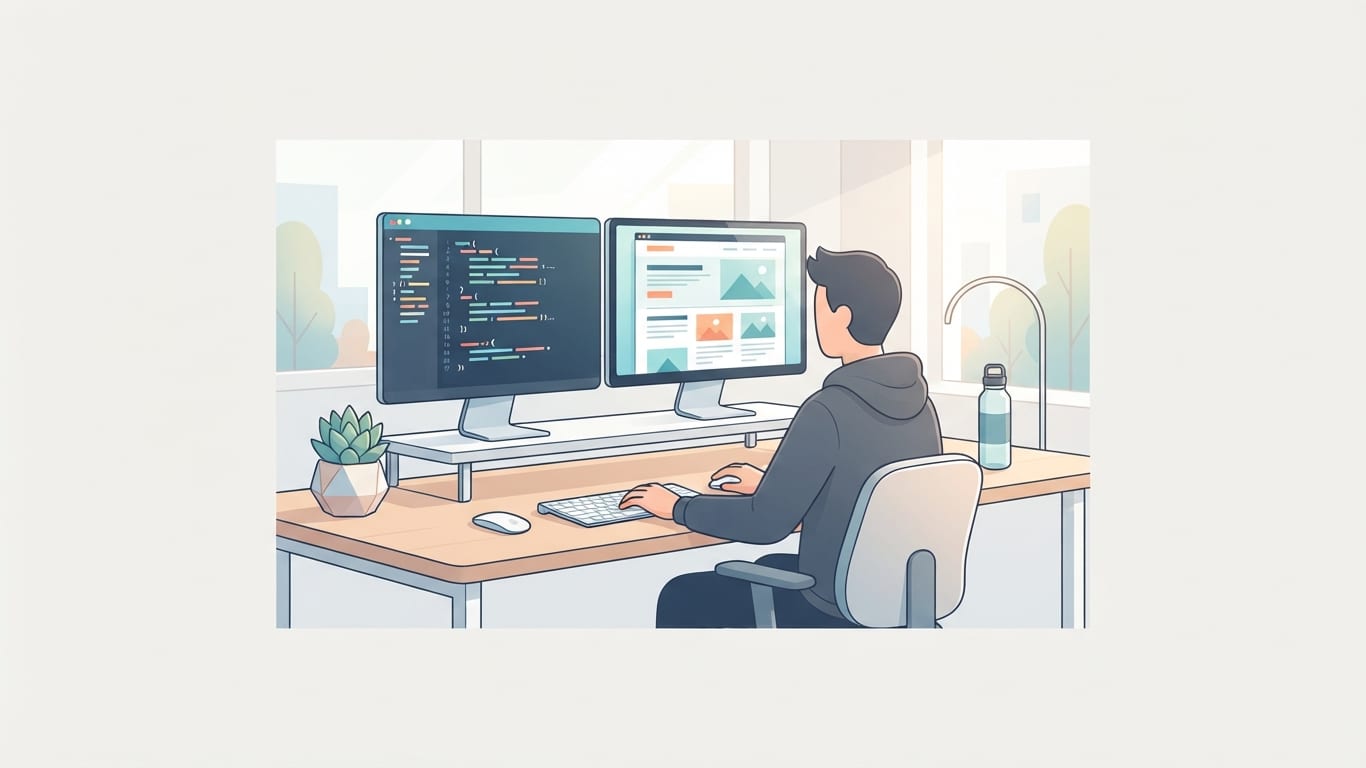
Understanding the Core Distinctions
Web development is specifically defined as the process of creating websites by Mindpath Tech, encompassing everything from server logic and databases to the visual elements that create an online presence.
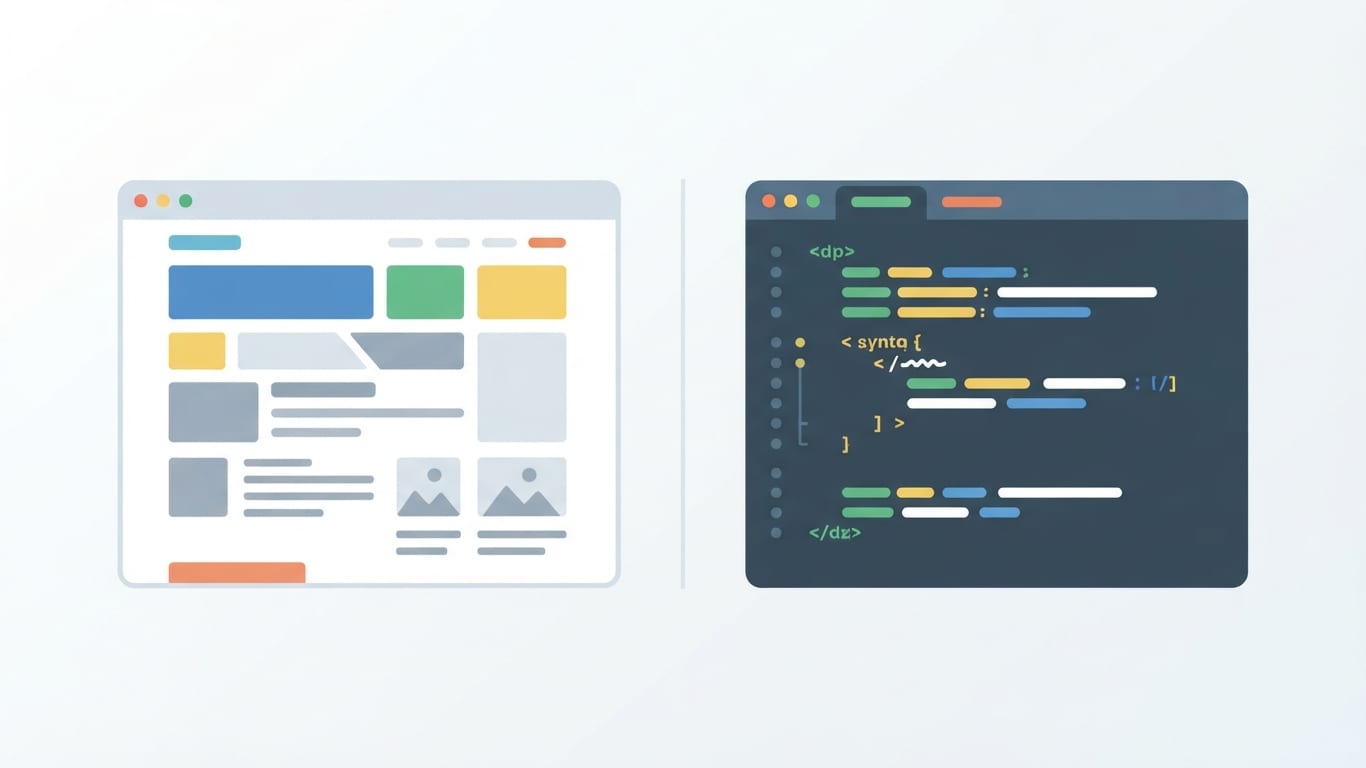 TechMediaArch.com |
| Browser window and code editor representing web development |
In contrast, software engineering has a broader scope that involves designing, developing, and maintaining various software systems and applications extending well beyond web-based environments, as outlined by S-PRO.
Indeed.com points out that software developers use languages like JavaScript and Ruby to create general programs and applications that solve user problems. Meanwhile, web developers focus on using HTML and CSS to build webpages and design their functionality and appearance.
Scope and Runtime Environments
Web development is widely considered a subset of software engineering or software development where applications are restricted to running primarily within web browsers or specific runtime environments, according to Reddit.
Quora notes that arguments that web development is distinct from traditional software engineering often highlight its reliance on JIT compilers rather than traditional compilation, alongside a heavy focus on interface design.
Toolchains and Development Environments
The CTO Club reports that Visual Studio Code, WebStorm, and Adobe Dreamweaver serve as popular website development software tools that help teams build responsive sites, design layouts, and launch updates faster with fewer errors.
Netguru notes that Visual Studio Code or Cursor function as primary code editors and IDEs within the modern web development toolchain. In this same workflow, Vite acts as the standard build layer while Vercel manages deployment.
Medium adds that Visual Studio Code remains a widely utilized code editor due to its built-in support for JavaScript, Node.js, and TypeScript, combined with smart code completion and an extensive extension marketplace.
Financial Investments and Market Projections
DesignRush reports that the cost of web development ranges widely from $12,000 to $150,000 for most business projects, depending on required features, complexity, and whether an agency or individual builds the site.
Ronas IT states that building a website through professional development teams can cost anywhere from $5,000 for a basic marketing site to over $60,000 for advanced custom web applications.
NEPA Works notes that basic professional web development and design services in the USA typically start around $300 to $800 for simple landing pages and range from $700 to $1,500 for standard business websites.
The Guideflow Blog projects that the global web development market will reach $82.4 billion in 2026, with cloud-based web development solutions accounting for 69.2% of the market in 2025.
Evaluating Future Career Decisions
Cantech emphasizes that learning web development remains valuable, but requires a shifted focus toward mastering system architecture, AI tool integration, UX design, and security rather than memorizing basic syntax alone. For professionals exploring broader career paths, reviewing Web Development vs Full Stack Development: Key Differences provides additional context.
Daily workflow tools are also evolving rapidly. Stack Overflow reports that approximately 76% of developers currently use or plan to integrate AI-powered developer tools into their daily workflows.
Effective Learning Roadmaps
Mastering modern programming requires structured educational pathways and reliable resources. WsCube Tech outlines a structured learning path for modern web development that begins with understanding HTTP/HTTPS protocols and DNS before moving sequentially into HTML, CSS, JavaScript, and backend databases.
Successful learners combine multiple resources to build practical competence. Daily.dev reports that successful learners in self-taught programming combine free foundational tools with specialized practical projects, structured study paths, and AI-assisted debugging.
Reddit recommends interactive platforms like The Odin Project and freeCodeCamp for learning web development fundamentals. Class Central recommends Responsive Web Design by freeCodeCamp and Foundations by The Odin Project as structured paths to learn HTML, CSS, and full-stack JavaScript interactively.
Coursera details a beginner learning roadmap that starts by creating basic web pages with headings and paragraphs, styling them with CSS, adding JavaScript alert interactions, and utilizing Git for version control.
Beginners must also avoid common strategic missteps during their education. Medium warns that a common mistake for beginners is jumping straight into complex frameworks like React, Angular, or Vue without establishing fundamental knowledge of HTML, CSS, and core JavaScript.
To understand how these frontend components communicate with backend services, developers frequently study What Does API Mean in Software Development.
 TechMediaArch.com |
| Interconnected systems representing software development |
Essential Coding Toolkits
Choosing the right utilities helps developers maintain clean codebases and accelerate project delivery. The development ecosystem relies on specific categories of utilities, as outlined below:
- Code editors and IDEs like Visual Studio Code, Cursor, and WebStorm for writing and debugging source code.
- Build layers and bundlers like Vite for compiling assets and managing local development servers.
- Deployment platforms like Vercel for hosting applications and publishing updates to production environments.
- Interactive learning resources like The Odin Project and freeCodeCamp for mastering foundational programming skills.
Project Budget Factors
Project expenditures vary based on technical requirements and production methods. Key cost determinants include:
- Basic marketing pages and simple landing pages starting between $300 and $800 through US design agencies.
- Standard business websites priced from $700 to $1,500 depending on page count and custom design elements.
- Professional agency builds ranging from $12,000 to $150,000 for complex corporate implementations.
- Advanced custom web applications exceeding $60,000 when built by specialized development teams.
FAQ
What is the best web development software?
Popular website development software tools include Visual Studio Code, WebStorm, and Adobe Dreamweaver, which help teams build responsive sites, design layouts, and launch updates faster with fewer errors. Netguru notes that Visual Studio Code and Cursor function as primary code editors and IDEs within the modern web development toolchain.
Is web development software engineering?
Web development is widely considered a subset of software engineering or software development where applications are restricted to running primarily within web browsers or specific runtime environments, according to Reddit. Quora notes that arguments distinguishing web development from traditional software engineering often highlight its reliance on JIT compilers and interface design.
How much is web development cost?
DesignRush reports that the cost of web development ranges widely from $12,000 to $150,000 for most business projects, depending on required features and complexity. Ronas IT notes that building a website through professional development teams can cost anywhere from $5,000 for a basic marketing site to over $60,000 for advanced custom web applications.
Should i learn web development in 2026?
Learning web development remains valuable, but Cantech explains it requires a shifted focus toward mastering system architecture, AI tool integration, UX design, and security rather than memorizing basic syntax alone. Stack Overflow adds that approximately 76% of developers currently use or plan to integrate AI-powered developer tools into their daily workflows.
What is the best way to learn web development?
Successful learners combine free foundational tools with specialized practical projects, structured study paths, and AI-assisted debugging, according to Daily.dev. WsCube Tech outlines a structured learning path starting with HTTP/HTTPS protocols and DNS before moving sequentially into HTML, CSS, JavaScript, and backend databases.