Introduction
Learning Python programming typically takes anywhere from two to six months to grasp the fundamentals, while gaining job-ready skills requires a commitment of six to 12 months. This timeline varies based on prior experience, daily study hours, and individual goals in the technology sector.
 TechMediaArch.com TechMediaArch.com |
| Person at a desk learning Python programming on a laptop |
Python has established a dominant position in the modern technology landscape. DeVry University notes that Python was ranked as a top language in popularity indexes like TIOBE and named a most wanted language by Stack Overflow due to its simplicity, readability, and broad community support. This widespread adoption raises practical questions for newcomers entering the industry.
Prospective developers often weigh the career implications before committing time to a new technical stack. FDM Group states that learning Python improves professional job prospects, as it has ranked among the top in-demand programming languages according to LinkedIn data. Understanding the timeline and commitment required helps learners plan their educational trajectory effectively.
To provide a realistic roadmap, educational platforms and developer networks have tracked average learning curves. The following sections examine how long the learning process takes, what factors influence progress, and how to structure study habits for optimal results. Those researching career pivots can also review broader trends by reading Why Web Development Is Still a Great Career Choice Today for additional context on software engineering paths.
Understanding the Basic Timeline for Beginners
For complete beginners starting with no coding experience, mastering the basics generally takes two to three months with five to 10 hours of weekly practice, according to Mimo. This initial phase focuses on core programming concepts such as variables, loops, conditional statements, and basic data structures. Learners acquire the foundation necessary to understand how instructions are passed to a computer interpreter.
While structured courses set specific paces, raw beginners can experience rapid initial milestones. Coursera notes that learning the fundamentals of Python typically takes around two to six months, though a beginner can write their first short program in a matter of minutes. This immediate feedback loop often encourages learners during the first week of study, demonstrating that coding is an accessible craft rather than an impenetrable science.
Structured curricula help break down this initial window into manageable blocks. Dataquest outlines a structured learning path that recommends spending a maximum of two weeks on basic syntax, followed by guided projects in weeks three through six, and independent projects over months two and three. This progression prevents learners from getting stuck in tutorials for too long, pushing them to apply their knowledge dynamically.
Beyond basic syntax, expanding into functional programming and simple script creation requires steady repetition. Developer Roadmaps indicates that it takes approximately one month to learn Python basics before moving on to logic formulation, debugging, and intermediate exercises. During this period, students transition from copying sample code lines to writing small utility functions that perform arithmetic calculations, string manipulations, and basic file input and output operations.
The Impact of Prior Experience on Learning Speed
The time required to become proficient shifts significantly for individuals who already understand computer science principles. Google for Developers provides free resources, lecture videos, and structured coding exercises specifically tailored to help individuals with a little programming experience learn basic to advanced Python concepts efficiently. These resources allow developers coming from other languages to bypass foundational computer architecture lessons and focus directly on pythonic syntax paradigms.
Without a prior programming background, Reddit reports that it typically takes about a year of practice to become proficient enough to build custom scripts and solve complex problems off-script. Building this independence requires moving away from guided tutorials and learning how to read documentation, decipher error tracebacks, and troubleshoot unexpected script failures independently.
For individuals learning Python without programming experience, Mimo emphasizes that setting aside consistent weekly hours is the primary driver of progress. The cognitive load of learning programming logic alongside syntax adds extra weeks to the timeline compared to developers transitioning from languages like JavaScript or C++ who only need to map familiar concepts to new keyword structures.
Despite these challenges, language design plays a role in smoothing out the learning curve. FDM Group reports that Python is widely considered one of the easiest programming languages to learn because its syntax borrows elements from natural English, making it highly readable. This readability reduces the time spent deciphering cryptic error messages or complex punctuation rules, allowing new coders to focus purely on algorithm design.
Progressing from Basics to Intermediate Projects
Moving past introductory syntax represents the most critical transition in a programmer's development. Developer Roadmaps notes that it takes three to six months to build intermediate projects after mastering the initial fundamentals. In this phase, students stop doing isolated exercises and begin organizing multiple files, writing custom classes, handling exceptions, and consuming external APIs.
During this intermediate phase, learners apply syntax to real-world scenarios rather than abstract exercises. Coursera points out that Python is a versatile general-purpose language heavily utilized across specialized fields such as web development, data analysis, and machine learning. Learners often choose one of these domains to focus their intermediate project work, applying web frameworks to build applications or data libraries to process local datasets.
To accelerate this transition, educational methodologies emphasize practical application over rote memorization. DataCamp states that an expert recommendation for the best way to learn Python is to minimize syntax memorization and transition to building actual projects as quickly as possible using a learn-by-doing approach. By actively wrestling with project logic, developers retain data structures and control flow concepts much faster than they would through passive reading.
As learners build these projects, they encounter bugs, architectural challenges, and performance bottlenecks. Resolving these hurdles builds the muscle memory required for professional software engineering tasks. Readers interested in the practical applications of these intermediate scripts can explore What is Python Programming Used For in Modern Tech to see how these concepts function in production environments across different industries.
 TechMediaArch.com TechMediaArch.com |
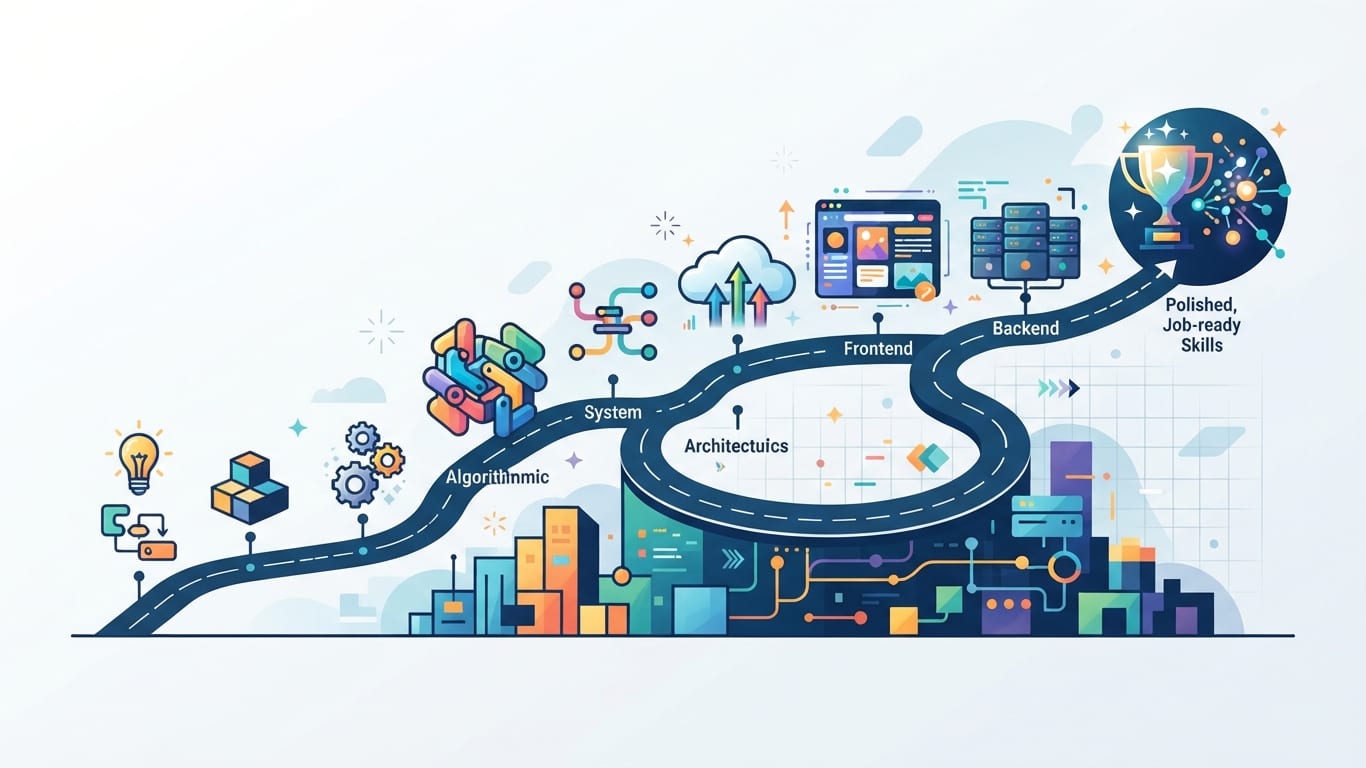
| Timeline roadmap showing steps to master Python programming |
Reaching Job-Ready Proficiency
Transitioning from a hobbyist coder to a professional software engineer requires a comprehensive time investment. Developer Roadmaps estimates a total commitment of six to 12 months to gain job-ready skills that satisfy hiring managers in the technology sector. During this window, individuals build extensive GitHub portfolios, participate in code reviews, and learn how to write maintainable, testable codebases.
Other industry educators suggest that timeline can extend depending on specialization and portfolio depth. Skillcrush notes that getting good enough at Python to qualify for a tech job can take anywhere from 12 to 18 months depending on the dedicated time investment. This extended timeline often applies to career switchers balancing full-time employment while studying coding part-time.
Job readiness involves more than just writing functional scripts; it requires version control knowledge through tools like Git, database integration via SQL, API utilization, and collaborative development practices. Learners spending 15 to 20 hours a week typically land on the shorter end of the six to 12-month spectrum, while those with fewer weekly hours extend their overall timeline.
Employers also value a demonstrable portfolio of deployed applications over certificates. Meeting these expectations requires building end-to-end projects that solve genuine problems, documenting the code cleanly on public repositories, and understanding how to collaborate within team environments using standard industry tools and agile workflows.
The Long-Term Path to Complete Mastery
While job readiness can be achieved within a year, absolute mastery of the language is an ongoing process. Coursera highlights that developing full mastery of Python's vast array of libraries and advanced functions can take anywhere from many months to years. As software engineers tackle increasingly complex distributed systems, they continually uncover deeper layers of the language.
Python's ecosystem spans thousands of third-party packages covering everything from web frameworks like Django to data visualization libraries like Pandas and deep learning libraries like TensorFlow. No single developer masters every library, but senior engineers develop a deep understanding of core language mechanics, memory management, garbage collection, and design patterns.
Achieving this level of fluency involves studying advanced topics such as decorators, generators, metaclasses, and asynchronous programming. These features allow senior developers to write highly efficient, scalable code for enterprise applications that handle massive data throughput without crashing.
Continuous learning remains a core requirement in technology regardless of experience level. As Python evolves through new feature releases and performance improvements, experienced developers regularly update their skill sets to incorporate language enhancements and security patches.
FAQ
how long does it take to learn python without programming experience
For complete beginners starting with no coding experience, mastering the basics generally takes two to three months with five to 10 hours of weekly practice, according to Mimo. Without a prior programming background, Reddit reports that it typically takes about a year of practice to become proficient enough to build custom scripts and solve complex problems off-script.
what is the best way to learn python programming
DataCamp states that an expert recommendation for the best way to learn Python is to minimize syntax memorization and transition to building actual projects as quickly as possible using a learn-by-doing approach. Additionally, Dataquest outlines a structured learning path that recommends spending a maximum of two weeks on basic syntax, followed by guided projects in weeks three through six, and independent projects over months two and three.
how long does it take to master python programming
Coursera highlights that developing full mastery of Python's vast array of libraries and advanced functions can take anywhere from many months to years. While basic proficiency can be reached in months, deep architectural understanding and fluency across specialized fields require long-term application.
should i learn python programming
FDM Group states that learning Python improves professional job prospects, as it has ranked among the top in-demand programming languages according to LinkedIn data. Furthermore, DeVry University notes that Python was ranked as a top language in popularity indexes like TIOBE and named a most wanted language by Stack Overflow due to its simplicity, readability, and broad community support.
what is the easiest way to learn python programming
FDM Group reports that Python is widely considered one of the easiest programming languages to learn because its syntax borrows elements from natural English, making it highly readable. Beginners can leverage free structured assets like Google for Developers, which provides free resources, lecture videos, and structured coding exercises specifically tailored to help individuals learn basic to advanced concepts.