Understanding Ransomware: A Foundational Definition
When exploring what is ransomware in cyber security, it helps to understand it as a specialized type of malicious software, or malware, that locks a victim's sensitive files, devices, or systems, holding them hostage until a ransom is paid. This digital hostage-taking has become one of the most pressing threats to modern organizations. To better grasp how malicious actors infiltrate modern networks, reviewing a comprehensive review of cyber security principles can provide essential context on how digital defenses operate. The mechanics behind these threats are designed to paralyze daily operations by turning an organization's own data against them. Security teams must remain vigilant because a failure in basic perimeter defense can invite this devastating software into the environment. Understanding this foundational definition is the first step in protecting enterprise infrastructure, ensuring that IT staff recognize the urgency of implementing robust access controls and constant monitoring across all connected endpoints.
 TechMediaArch.com TechMediaArch.com |
| Digital lock securing glowing data nodes |
Differentiating Ransomware and Broader Cyber Threats
Many people wonder about the exact difference between ransomware and cyber attack events. A general cyber attack is any malicious attempt to compromise, disrupt, or gain unauthorized access to computer systems, while a ransomware attack is a targeted sub-category specifically focused on financial coercion via file locking or data holding. A general cyber attack might involve stealing intellectual property quietly, deploying spyware, or taking a website offline without demanding money. Ransomware, however, is deliberately loud and disruptive, designed to make its presence known immediately so the victim feels pressured to pay. Grasping this nuance helps security analysts prioritize their defensive strategies. While general network intrusions require broad monitoring, defending against this specific digital threat demands targeted backup and recovery protocols. Organizations must realize that every ransomware incident is a cyber attack, but not every cyber attack involves holding system data hostage for financial gain.
Is Ransomware the Same Thing as Cyber Extortion?
A frequent point of confusion is whether is ransomware the same as cyber extortion. In reality, ransomware is not entirely distinct from cyber extortion; rather, ransomware is a subset and specific tactic within the broader umbrella category of cyber extortion. Cyber extortion is a broad term for any threat by cybercriminals to harm a business—such as via DDoS attacks, data exposure, or operational disruption—to force compliance, whereas ransomware specifically locks or encrypts data functionality. Understanding this relationship helps clarify modern digital crime trends. As threats evolve, examining emerging tech concerns like Asia's Growing Definition of AI-Driven Cybercrime Threatens Global Security reveals how bad actors scale their extortion schemes globally. Recognizing that encryption-based locking is just one tool in an extortionist's toolkit allows organizations to build comprehensive defense strategies that guard against non-malware extortion tactics as well as traditional file-locking malware.
How Malicious Software Infiltrates Systems
Knowing how does ransomware work begins with understanding how these malicious programs gain initial access to a network. Ransomware typically enters a system through phishing emails, compromised credentials, malicious links, contaminated ads, or unpatched software vulnerabilities. Once an unsuspecting user clicks a fraudulent link or opens an infected attachment, the malicious code slips past the initial perimeter defenses. Threat actors continuously scan corporate networks for weak entry points, exploiting human error and outdated technology. Protecting sensitive corporate data requires looking at broader infrastructure requirements, much like how The Trust In AI Systems How Companies Can Demonstrate Security and Compliance emphasizes strict internal governance and secure operational baselines. By securing entry vectors and educating employees on how to spot deceptive emails, organizations can drastically reduce the likelihood that this malicious software will ever cross their network threshold in the first place.
The Core Mechanism of Encryption and Payment
Once inside a network, the malware quietly executes code to encrypt local drives, attached storage, and networked computers, rendering files completely unusable without an attacker's decryption key. This core mechanism operates silently in the background, mapping out drives and scrambling file structures before the victim realizes anything is wrong. Following encryption, the victim's screen freezes with a pop-up note or text file demanding payment—frequently requested in hard-to-trace cryptocurrencies like Bitcoin. This sudden operational standstill highlights why ransomware is dangerous to organizations of all sizes. The technical precision required to lock thousands of files simultaneously makes recovery nearly impossible without a valid, uncompromised backup. As encryption algorithms grow more sophisticated, security teams must anticipate future challenges, looking ahead to how developments like Quantum Threats to Encryption: 7 Actions Security Teams Should Take Before 2027 will impact data security standards. Ultimately, the encryption process strips organizations of their digital autonomy overnight.
 TechMediaArch.com TechMediaArch.com |
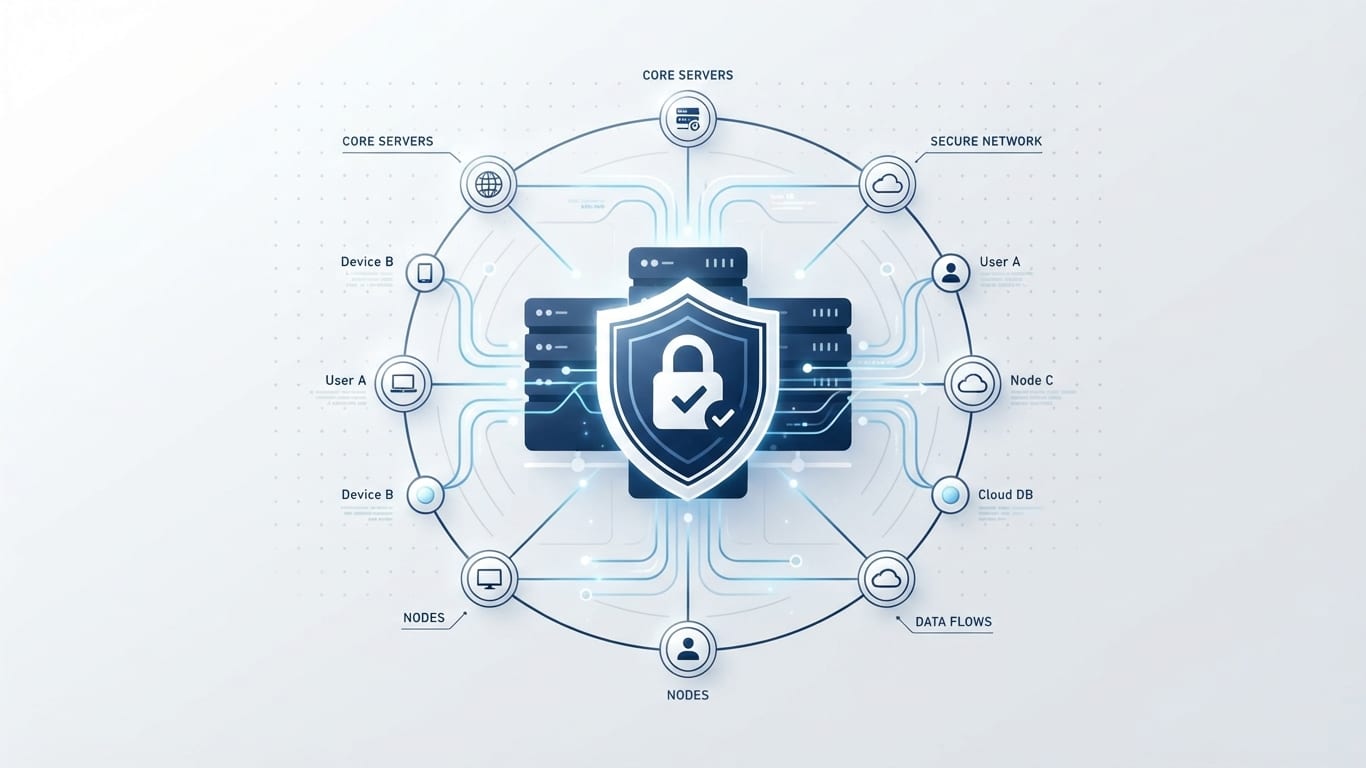
| Interconnected network nodes with a secure shield |
The Escalation to Double and Triple Extortion
Modern ransomware has evolved far beyond simple file-locking routines. Today, threat actors frequently employ double-extortion attacks, where hackers steal sensitive data and threaten to leak or publish it online if the ransom isn't paid. This tactic removes the security safety net of having offline backups, because even if a company can restore its systems from scratch, the public exposure of proprietary data can destroy customer trust and invite heavy regulatory fines. Advanced campaigns have further introduced triple-extortion tactics, which add threats to use stolen data to directly target and attack the victim's customers or business partners. As threats become more automated and sophisticated, exploring advanced defense mechanisms like Supercharging Your Security The Benefits of Agentic AI in 2025 becomes vital for modern security architecture. These multi-layered extortion schemes prove that cybercriminals are continuously refining their business models to maximize financial pressure on affected enterprises across every sector.
The Business Model of Ransomware-as-a-Service
The proliferation of Ransomware-as-a-Service (RaaS) allows cybercriminal developers to build malware kits and lease them out to less-skilled affiliates, fueling a massive scale-up in attacks. Under this business model, the creators of the malicious software handle the technical backend—such as building encryption tools and managing payment portals—while affiliates handle the actual network infiltration and deployment. They then split the extortion proceeds. This industrialization of cybercrime lowers the barrier to entry for malicious actors, resulting in a staggering volume of daily attacks. According to the IBM 2026 X-Force Threat Intelligence Index, active ransomware and extortion groups rose by 49% year-over-year from 73 groups in 2024 to 109 groups in 2025. This exponential growth demonstrates that digital extortion is operating with the efficiency of a corporate enterprise. Understanding this ecosystem explains why organizations face relentless, highly organized attacks rather than isolated, amateur hacking attempts.
Targeted Industries and Real-World Financial Impact
Manufacturing, healthcare, and energy remain among the most heavily targeted industries, with manufacturing ranking as the top targeted sector for five consecutive years as of 2025. Threat actors frequently demand seven-figure or eight-figure ransom amounts, and global costs span far beyond the ransom itself to cover expensive operational downtime, recovery processes, regulatory fines, and reputational damage. High-profile examples include the 2021 Colonial Pipeline attack that disrupted southeastern U.S. fuel supplies, and a 2025 attack on a hospital district impacting 500,000 patient records. These incidents illustrate that the consequences extend deep into physical infrastructure and public safety. When critical supply chains or healthcare facilities halt operations, the societal toll is immense. Organizations within these high-risk sectors must treat digital defense as a core operational priority rather than an afterthought, given the severe financial and physical fallout associated with modern system lockouts.
Best Practices, Prevention, and the Stance on Paying
Government and law enforcement agencies like the FBI do not support paying ransoms, noting that payment does not guarantee data recovery and actively incentivizes future criminal operations. Instead, cybersecurity authorities recommend maintaining regular, offline data backups, keeping operating systems and software updated, utilizing multi-factor authentication (MFA), and running automated anti-malware solutions. Adhering to these foundational best practices creates a resilient defense that can withstand sophisticated intrusion attempts. Offline backups ensure that an organization can restore its operations cleanly without negotiating with criminals. Multi-factor authentication adds a critical barrier against compromised credentials, while prompt patching closes the software vulnerabilities that malicious actors rely on for initial access. By combining diligent preventive measures with a clear policy against extortion payouts, businesses can neutralize the threat and protect their critical digital assets from compromise.
FAQ
What is ransomware in cyber security?
Ransomware is a specialized type of malicious software that locks a victim's sensitive files, devices, or systems, holding them hostage until a financial ransom is paid.
What are ransomware in cyber security?
In cyber security, ransomware programs are malicious tools utilized by threat actors to encrypt organizational data, execute double-extortion schemes, and coerce companies into multi-million dollar payouts.
Is ransomware the same as cyber extortion?
Ransomware is not entirely distinct from cyber extortion; rather, ransomware is a subset and specific tactic within the broader umbrella category of cyber extortion.
What is the difference between ransomware and cyber attack?
A cyber attack is any malicious attempt to compromise, disrupt, or gain unauthorized access to computer systems, while a ransomware attack is a targeted sub-category specifically focused on financial coercion via file locking.
How does ransomware work?
Ransomware typically enters a system through phishing emails, malicious links, or unpatched vulnerabilities, after which it quietly executes code to encrypt local and networked drives, rendering files completely unusable.
Why ransomware is dangerous?
Ransomware is dangerous because it paralyzes business operations, exposes sensitive stolen data through double-extortion tactics, and demands steep seven-figure or eight-figure ransoms.