Understanding the Core Difference Between Product Management and Product Marketing
Navigating the corporate landscape of technology and business often leads to confusion regarding organizational roles, particularly the difference between product management and product marketing. At its most fundamental level, product management focuses on creating, defining, and building the actual product, which can be thought of as getting the cereal on the shelf. Conversely, product marketing focuses on bringing it to market, positioning, pricing, and messaging, which is akin to getting the box off the shelf. While both functions share the ultimate goal of driving business success, they operate in distinct spheres. Product management centers on the product itself—what gets built, how it works, and how it solves user problems. On the other hand, marketing centers on promotion, market reach, and convincing customers to make a purchase. When these two teams work closely alongside broader commercial developments, organizations often see massive systemic benefits, similar to how major breakthroughs require careful coordination across technical and market fronts as outlined in insights on Market Insights: Trump's "Stargate" and AI's Rising Tide.
 TechMediaArch.com TechMediaArch.com |
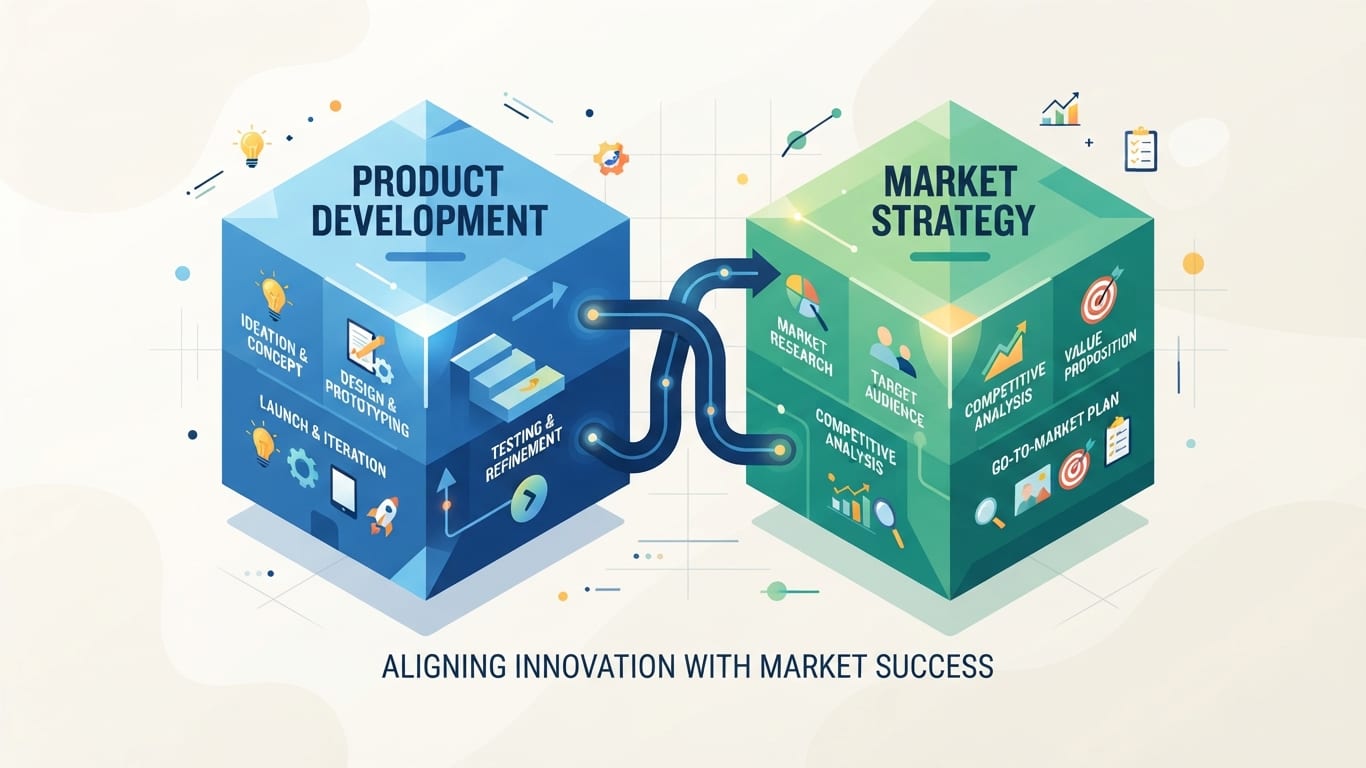
| Abstract geometric shapes representing product management and marketing |
To fully appreciate this distinction, consider how a product evolves from a mere concept into a tangible solution. Product management spends the majority of its time looking inward and upward: inward toward the engineering teams, architecture, code quality, and technical debt, and upward toward company vision and core user pain points. Product marketing spends its time looking outward and forward: outward toward the competitive landscape, buyer personas, market messaging, and sales enablement channels. Without product management, there is no product to sell; without product marketing, the market never learns that the product exists or understands why it is superior to existing alternatives.
The Core Responsibilities of Product Management
To understand how a product comes to life, one must examine the core responsibilities of product management. Product managers oversee the end-to-end product lifecycle, acting as the strategic anchor for everything the team builds. This broad responsibility includes defining the product vision, prioritizing features, outlining long-term roadmaps, and collaborating closely with engineering and design teams. Instead of writing code or designing user interfaces, product managers serve as the connective tissue between business goals, technical feasibility, and user needs. They must balance competing demands from various stakeholders while keeping the engineering team focused on building the right things. This foundational product discipline is crucial for modern technology companies, laying the groundwork for successful commercial rollouts whether a company is building productivity software, hardware devices, or even cutting-edge video generation tools similar to the innovations discussed in Meta Unveils Revolutionary AI Video Marketing.
Furthermore, product managers are tasked with continuous stakeholder management. They synthesize inputs from customer support, executive leadership, sales teams, and user research to make difficult trade-offs. Because engineering bandwidth is always finite, every "yes" to a new feature is a "no" to something else on the backlog. Product managers utilize frameworks, customer data, and strategic intuition to defend these choices. They maintain the product roadmap, ensuring that both short-term deliverables and long-term strategic milestones align with the broader company mission. By owning the definition of success for every feature, they ensure that engineering efforts translate directly into measurable business outcomes.
The Core Responsibilities of Product Marketing
Once a product is conceptualized or built, the focus shifts toward bringing it to the target audience through the core responsibilities of product marketing. Product marketing managers handle customer research, competitor intelligence, launch strategies, go-to-market execution, and enablement materials for sales and customer success teams. They are the voice of the market inside the company, ensuring that the development team understands who they are building for and what competitors are doing. By mastering messaging and positioning, product marketing professionals translate complex technical specifications into compelling value propositions that resonate with buyers. They craft the launch narrative, determine optimal pricing models, and equip customer-facing teams with the collateral needed to close deals. Without this critical bridge, even the most brilliantly engineered software or financial platform might struggle to gain traction in competitive sectors like those analyzed in Fintech Stocks: A Sober Analysis of the Digital Fintech Xchange.
Product marketing professionals also serve as master communicators across multiple departments. They work closely with content writers, demand generation marketers, PR teams, and sales enablement managers to ensure consistency in every external touchpoint. By conducting Win/Loss interviews, they uncover why prospective customers chose a competitor or signed on the dotted line, feeding these critical insights right back into the product organization. They define buyer personas and market segments, ensuring that promotional campaigns speak directly to the specific anxieties, workflows, and economic drivers of the target audience.
How Product Management Works Day-to-Day
An examination of how does product management work reveals a systematic, highly collaborative process driven by data and continuous iteration. Product managers gather customer feedback and business goals, write product requirements documents (PRDs), break hypotheses down into user stories, and partner with developers within iterative delivery cycles, such as two-week sprints. This workflow ensures that development remains flexible and responsive to new insights. Rather than executing a rigid multi-year plan, product managers constantly test assumptions against real-world user behavior. They work day-to-day alongside software engineers and UX designers to translate abstract business objectives into concrete features. By maintaining a steady cadence of backlog grooming, scoping, and sprint planning, product management ensures that engineering resources are directed toward building features that deliver measurable value to users and the business alike.
In practice, a typical week for a product manager involves reviewing analytics dashboards to see how recent releases are performing, meeting with customer success to triage recurring user complaints, and collaborating with UX designers on wireframes for upcoming features. They write detailed user acceptance criteria so developers have absolute clarity on what needs to be built. During sprint planning sessions, they help the engineering team estimate effort and prioritize tasks. Throughout this entire cycle, the product manager acts as a buffer and a facilitator, protecting the engineering team from shifting priorities while ensuring that the final output aligns seamlessly with the overarching product strategy.
 TechMediaArch.com TechMediaArch.com |
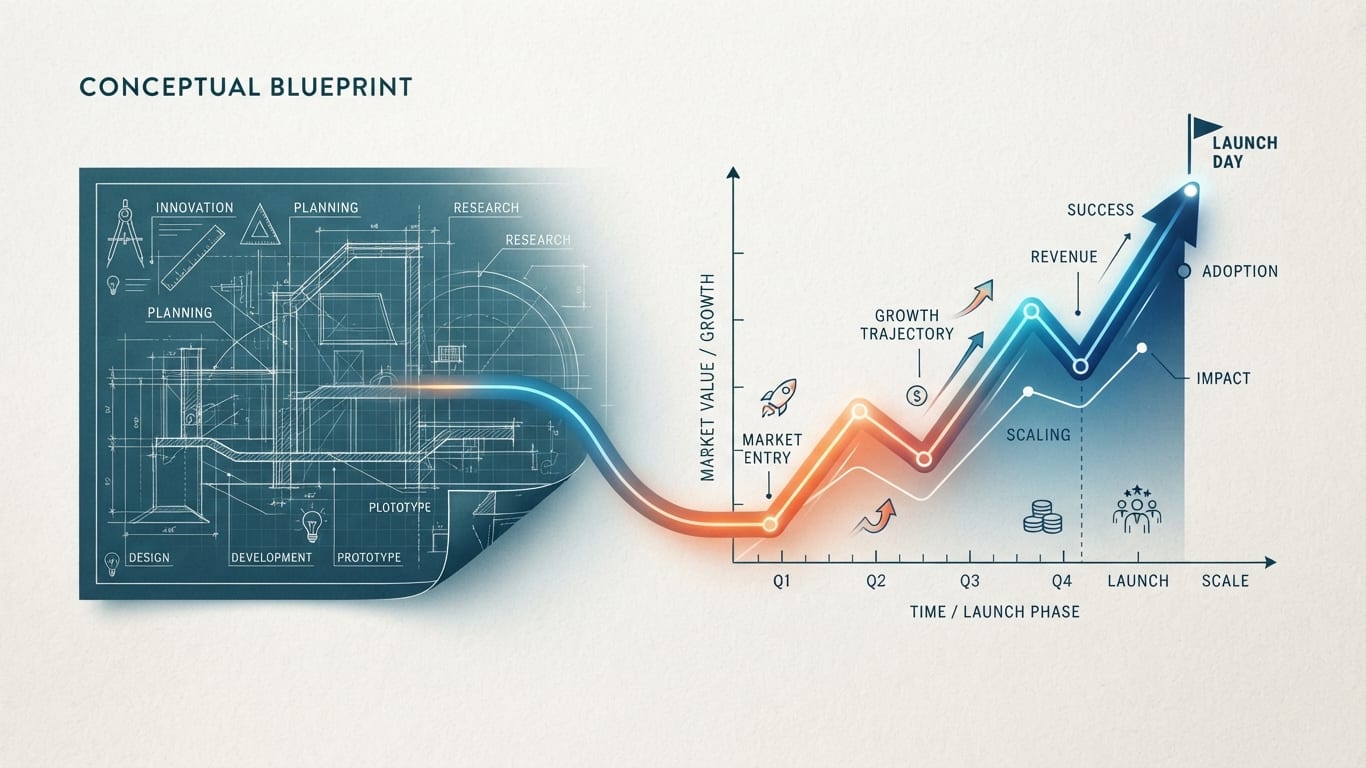
| Minimalist concept art of a product transitioning to market |
Organizational Realities: Departmental Placement
As companies structure their organizational charts, leaders frequently ask: does product management comes under marketing, or is product management part of marketing? The clear answer is no. Product management is a distinct discipline focused on product strategy, development, and engineering collaboration rather than sitting under a traditional marketing department. Though they are adjacent and work closely together, product management centers on what is built and how it solves user problems, whereas marketing centers on promotion and market reach. Grouping product management under marketing can lead to a myopic focus on short-term promotional campaigns rather than long-term product viability, technical debt management, and architectural soundness. Maintaining product management as an independent function ensures that product strategy is driven by deep technical understanding and user needs rather than solely by promotional calendars.
When product management reports directly into a product or engineering organization—or operates as a standalone unit reporting to executive leadership—it maintains the necessary objectivity to balance engineering constraints with business requirements. If product management sat inside the marketing department, the roadmap could easily become dominated by campaign-driven requests rather than foundational architectural improvements, security updates, and core utility enhancements. Keeping these functions separate empowers product managers to say "no" to short-term promotional quick fixes when they conflict with the long-term health and scalability of the product.
Product Management Versus Digital Marketing
Another common point of confusion arises when comparing product management with specialized promotional channels, highlighting the difference between product management and digital marketing. Digital marketing utilizes internet channels like SEO, social media, email, and paid ads to drive traffic and customer acquisition, whereas product management builds and iterates the core product functionality. A digital marketer focuses on conversion rates, ad spend efficiency, and channel optimization to attract users to a platform. In contrast, a product manager focuses on retention, user workflows, feature adoption, and the core utility of the platform itself. While a digital marketer brings visitors to the digital doorstep, the product manager ensures that the inside of the house meets user expectations, keeps them engaged, and solves their underlying problems effectively.
To put it in perspective, a digital marketing specialist spends their day analyzing cost-per-acquisition (CPA), optimizing Google Ads campaigns, adjusting social media copy, and running email open-rate experiments. A product manager spends their day analyzing user drop-off funnels within the app, streamlining account creation workflows, and working with software architects to reduce page load times. While both roles rely heavily on quantitative data and user psychology, their operational domains are entirely separate. Digital marketing is about acquisition and outward visibility; product management is about core utility, retention, and structural value delivery.
Leveraging Market Rhythms and Temporal Dynamics
Successful organizations understand how can product management leverage market rhythms to maximize commercial impact through seasonal trends, industry cycles, and release cadences. Product managers align product releases and promotional timelines with predictable consumer spikes, such as planning retail gadgets to launch right before holiday shopping seasons like Black Friday. Furthermore, product managers account for fast-paced tech innovation cycles or regulatory shifts by keeping feature development flexible and adaptive to commercial demands. Teams can also decouple continuous code deployment from customer-facing releases, utilizing seasonal launch patterns (such as Spring or Summer releases) to signal predictability to partners and align with marketing windows. Additionally, in dedicated product management models, funding is often secured for broader fiscal periods, such as a quarter or a year, allowing product managers to make responsive tactical adjustments without continuous re-approvals.
Managing these temporal rhythms requires meticulous planning across departments. For instance, in consumer electronics or retail tech, missing the Black Friday window can mean missing the majority of annual revenue, making the product manager's timeline non-negotiable. Similarly, in enterprise software, aligning major updates with predictable corporate budget cycles or industry conferences ensures that marketing has the right ammunition to drive high-impact campaigns. By mastering these market rhythms, product managers ensure their hard work hits the market when buyer intent and commercial receptivity are at their absolute peak.
The Measurable Business Impact of Alignment
When product management and product marketing operate in close harmony, the resulting synergy creates a powerful competitive advantage for the business. Research from Pragmatic Marketing indicates that companies with closely aligned product management and marketing teams experience 19% faster revenue growth and 15% higher profitability. This data underscores the reality that building a stellar product and bringing it to market effectively are two sides of the same coin. When product managers share deep customer insights with product marketing, and marketing feeds market intelligence back into the product roadmap, the entire organization moves faster and more cohesively. Alignment eliminates internal friction, ensures messaging matches actual product capabilities, and ultimately delivers a seamless, compelling experience for the end user from discovery to long-term retention.
Achieving this level of organizational alignment requires intentional collaboration frameworks. Product managers can share early beta feedback and usability testing findings with product marketing weeks before a public launch, allowing marketing to craft authentic, experience-backed messaging rather than theoretical copy. Conversely, product marketing can share comprehensive market research reports, competitor tear-downs, and win/loss analysis summaries directly with product managers to inform upcoming roadmap decisions. When both disciplines respect each other's domain expertise and maintain open lines of communication, the company avoids the dangerous disconnect where marketing promises features that product management has not yet built, or product management builds features that no one in the market actually knows how to use.
FAQ
What is the difference between product management and product marketing?
Product management focuses on creating, defining, and building the actual product (getting the cereal on the shelf), while product marketing focuses on bringing it to market, positioning, pricing, and messaging (getting the box off the shelf).
Does product management come under marketing?
No, product management is a distinct discipline focused on product strategy, development, and engineering collaboration rather than sitting under a traditional marketing department.
Is product management part of marketing?
No, though they are adjacent and work closely together, product management centers on what is built and how it solves user problems, whereas marketing centers on promotion and market reach.
How does product management work?
Product managers gather customer feedback and business goals, write product requirements documents (PRDs), break hypotheses down into user stories, and partner with developers within iterative delivery cycles such as two-week sprints.
How can product management leverage market rhythms?
Product managers can leverage market rhythms by aligning releases with seasonal shopping spikes like Black Friday, adapting to fast-paced tech innovation cycles, decoupling code deployment from customer-facing launch cadences, and utilizing structured fiscal planning periods for tactical flexibility.