 TechMediaArch.com TechMediaArch.com |
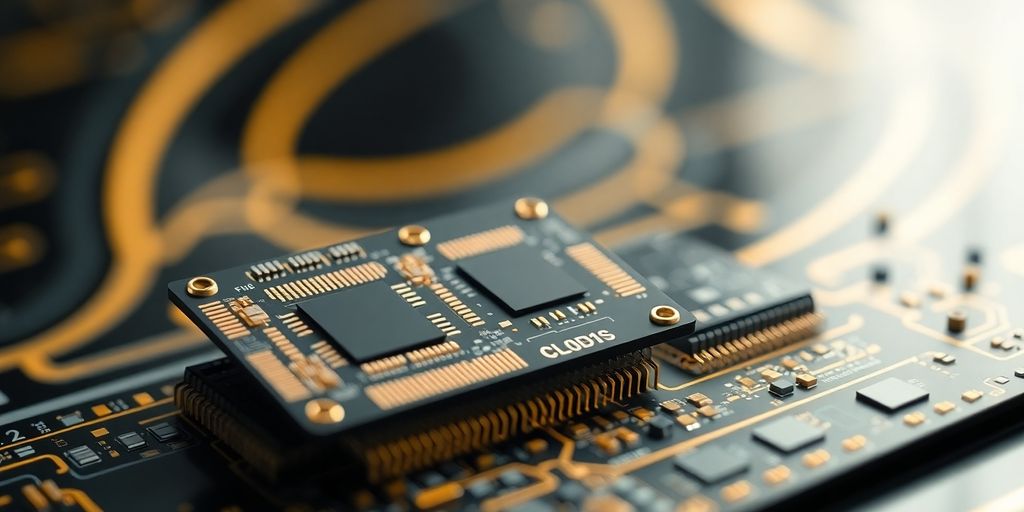
| Custom cloud chips. Photographic: Tech Media Arch. |
Key Takeaways
|
At this sprawling lab at Google's Silicon Valley headquarters, the focus is on innovation and efficiency. Here, Google is not just a cloud service provider but a pioneer in creating custom AI chips that are now being utilized by major players like Apple. This article delves into the intricacies of Google's chip-making process and its implications for the future of AI.
The Birth of Custom AI Chips
In 2015, Google introduced its Tensor Processing Units (TPUs), marking a significant milestone in the AI cloud era. The decision to create custom chips stemmed from the need to enhance voice recognition features, which required a substantial increase in computing power. This led to the realization that custom hardware could provide a 100-fold increase in efficiency compared to general-purpose hardware.
The Role of TPUs in AI Development
TPUs are specifically designed to accelerate machine learning tasks. They have become essential in training AI models, including Google’s own chatbot, Gemini. Interestingly, Apple has recently revealed that it also utilizes Google’s TPUs for its AI training, challenging the common perception that Nvidia dominates this space.
Google’s Competitive Edge
Google’s early investment in custom chips has allowed it to capture a significant share of the market. According to research, Google TPUs hold 58% of the custom cloud AI chip market, while Amazon follows with 21%. This silicon differentiation has helped Google elevate its status in the cloud computing arena, positioning it as a formidable competitor against Amazon and Microsoft.
The Evolution of TPUs
Since their inception, TPUs have evolved significantly. The latest version, TPU Version 5, connects nearly 9,000 chips together, showcasing the scalability and power of Google’s technology. This interconnected system allows for dynamic adjustments based on the computational needs of various tasks, enhancing efficiency and performance.
Collaboration with Industry Leaders
To maintain its competitive edge, Google collaborates with industry leaders like Broadcom and TSMC. Broadcom plays a crucial role in developing peripheral components, while TSMC manufactures the chips. This partnership is vital, especially considering the geopolitical risks associated with chip production in Taiwan.
The Future of AI Chips
Looking ahead, Google is set to launch its first general-purpose CPU, Axion, by the end of the year. This move is seen as a strategic step to enhance its internal services and maintain its competitive position in the market. However, Google’s late entry into the CPU market raises questions about its long-term strategy.
Environmental Considerations
As AI technology continues to grow, so does its environmental impact. Google is committed to reducing its carbon footprint and has implemented innovative cooling solutions to minimize water usage in its data centers. The company aims to drive its carbon emissions towards zero, reflecting a growing awareness of sustainability in tech.
Conclusion
Google’s journey in developing custom AI chips has not only transformed its operations but has also reshaped the AI landscape. With Apple now leveraging Google’s TPUs, the competition in AI is set to intensify. As Google continues to innovate and expand its chip offerings, the future of AI technology looks promising, albeit complex. The next five years will be crucial in determining how hardware advancements will influence the industry.
Frequently Asked Questions
How does Google's market share for custom cloud AI chips compare to competitors?
Through early investments in custom hardware, Google has captured a substantial portion of the market, holding a dominant position in the custom cloud AI chip sector. Research indicates that Google TPUs command over half of this specialized market, placing the company ahead of competitors like Amazon and Microsoft in the cloud computing arena.
Who manufactures Google's custom AI chips?
Google collaborates with key industry partners to bring its hardware to production, relying on specific external companies for manufacturing and component development. TSMC is responsible for producing the actual chips, while Broadcom assists in developing peripheral components required for the hardware ecosystem.
Which major company uses Google's TPUs to train its AI models?
Apple has publicly disclosed that it utilizes Google's specialized tensor processing units for training its own artificial intelligence models. This adoption by a major technology player highlights a significant shift in the broader AI landscape and challenges the common perception that Nvidia entirely dominates this specific hardware space.
What is the name of Google's new Arm-based CPU set to launch?
Alongside its advanced tensor processing units, Google is preparing to introduce a new general-purpose processor designed to enhance internal services. This upcoming Arm-based central processing unit, known as Axion, is scheduled for release alongside the latest TPU version, Trillium.
How many chips can Google connect together in its latest TPU version?
The scalability and raw power of Google's hardware infrastructure are demonstrated through its advanced interconnected chip systems. The fifth version of the TPU architecture is capable of linking nearly nine thousand individual chips together to dynamically adjust computational performance based on specific task demands.