Understanding the Scale and Mechanics of Phishing
Phishing is a type of cyberattack where threat actors masquerade as legitimate companies, authorities, or trusted individuals to trick people into revealing sensitive data. Understanding **what is phishing attack** methods requires looking at the sheer volume of daily digital threats circulating online. Approximately 3.4 billion spam and phishing emails are sent globally every single day, targeting both individual consumers and enterprise networks. This constant barrage of deceptive electronic mail represents one of the most persistent threats facing digital infrastructure today. Cybercriminals rely heavily on volume, knowing that even if a tiny fraction of recipients fall for the ruse, the financial and operational rewards will outweigh the minimal cost of launching millions of messages.
 TechMediaArch.com TechMediaArch.com |
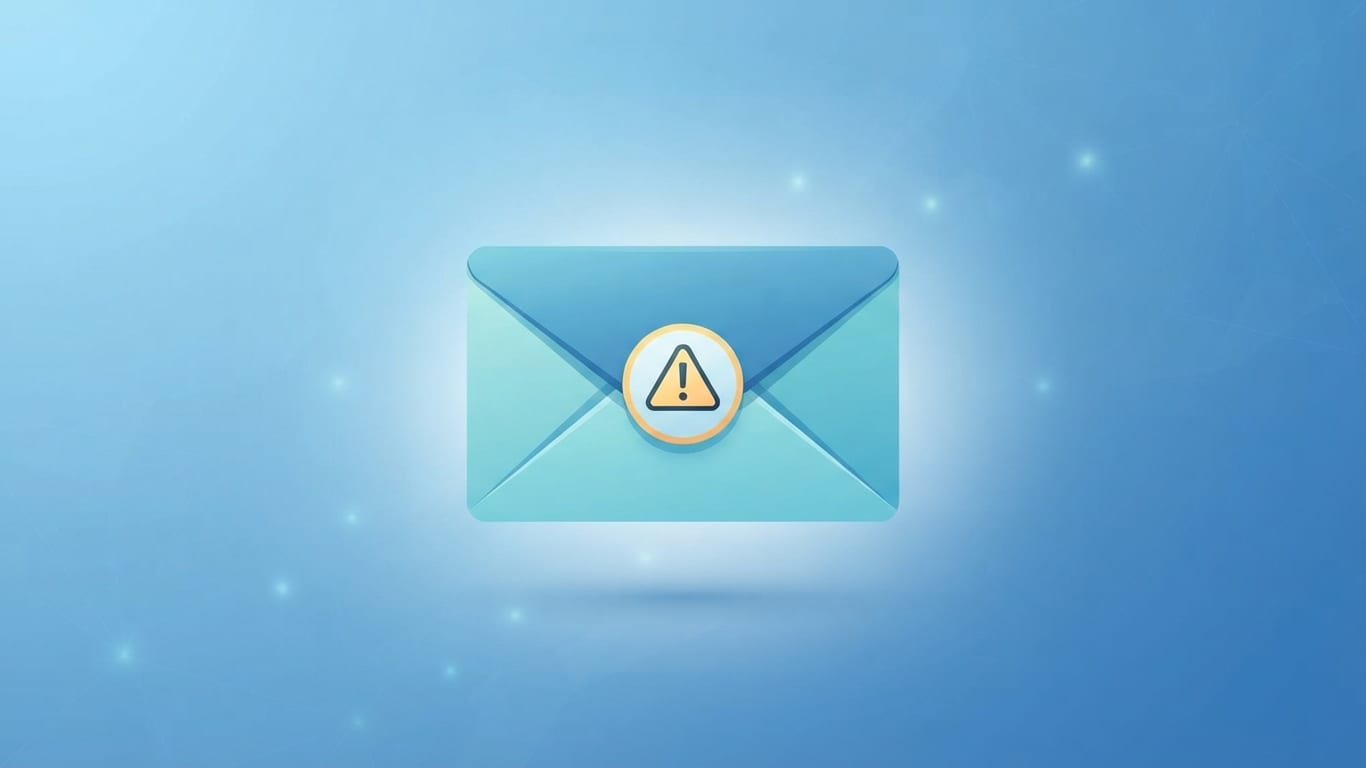
| Digital envelope with a warning symbol representing a phishing email |
Threat actors rely on deception rather than complex code to breach systems. This digital threat landscape affects every sector, making foundational security knowledge essential for modern internet users. For a broader look at how these messages arrive in personal inboxes, see What Are Phishing Emails and How Do Cyberattacks Work? to understand the mechanics behind standard email-based delivery mechanisms. As organizations expand their cloud footprints and remote workforces, the attack surface grows wider, giving malicious actors more opportunities to blend in with legitimate corporate communications. Consequently, identifying fraudulent digital messaging requires continuous vigilance, sophisticated filtering tools, and a deep understanding of how attackers mask their true identities behind spoofed domains and convincing visual branding.
How Phishing Operates as a Social Engineering Tactic
A frequent point of discussion among security professionals centers on whether **is phishing a social engineering attack**. Security researchers confirm that phishing is a direct form of social engineering, meaning it exploits human psychology, trust, and error rather than directly hacking software code. Instead of targeting system vulnerabilities, unpatched software flaws, or firewall misconfigurations, attackers target human behavior. They recognize that users are often the weakest link in any security chain, prone to distraction, fatigue, and cognitive biases that make them susceptible to manipulation.
By manipulating emotions such as fear, urgency, or curiosity, attackers convince targets to bypass security protocols voluntarily. For instance, a message warning that an employee's bank account will be closed within hours induces panic, short-circuiting rational thought and driving the victim to click a malicious link immediately. This psychological manipulation makes traditional software patches ineffective on their own, because no firewall can prevent a user from willingly handing over their password to a fraudulent portal. Security awareness training must address human behavior directly to counteract these manipulative techniques effectively, teaching personnel to pause, verify, and question unexpected requests regardless of how authoritative the sender appears.
Primary Objectives and Impacts on Organizations
To understand the danger of these campaigns, analysts must examine **what are phishing attacks designed to do**. Phishing attacks are designed to manipulate victims into taking harmful actions, such as sharing login credentials, disclosing credit card numbers, wiring money, or downloading malware like ransomware. Once attackers gain initial access through these stolen credentials, they often deploy malicious payloads to lock down enterprise networks, exfiltrate proprietary intellectual property, or demand extortion payments from executive leadership.
Data breaches caused by phishing cost organizations an average of USD $4.88 million per incident, according to enterprise cost reports. This staggering financial figure includes regulatory fines, forensic investigation costs, legal fees, customer notification expenses, and long-term brand reputation damage. Furthermore, FBI Internet Crime Complaint Center (IC3) data indicates that phishing and spoofing generated roughly $215.8 million in reported direct losses in 2025 alone. These financial figures highlight the severe economic damage inflicted by successful credential harvesting, proving that phishing is not merely an IT nuisance but a severe enterprise risk with direct bottom-line consequences.
The Statistical Weight of Phishing in Cyber Breaches
Security metrics consistently place phishing at the center of modern enterprise security incidents. Over 90% of all cyberattacks begin with a phishing email, and IBM data notes that phishing is the most common initial data breach vector, accounting for 15% of all breaches. Globally, roughly 3.8 million distinct phishing attacks were recorded across global tracking networks during 2025. These numbers demonstrate that fraudulent messaging remains the favored entry point for criminal syndicates, state-sponsored actors, and independent hackers alike.
This high frequency proves that initial access brokers and criminal syndicates rely heavily on deception to penetrate corporate perimeters rather than attempting expensive zero-day exploits. When a system is compromised via credential theft, attackers frequently escalate privileges to deploy destructive payloads across connected servers and workstations. For instance, initial access often leads directly to system-wide extortion, as detailed in What is Ransomware in Cyber Security: A Complete Guide regarding post-phishing infections. Once inside, malicious actors can quietly map the internal network, steal sensitive databases, and deploy ransomware precisely when it will cause maximum disruption to business operations.
 TechMediaArch.com TechMediaArch.com |
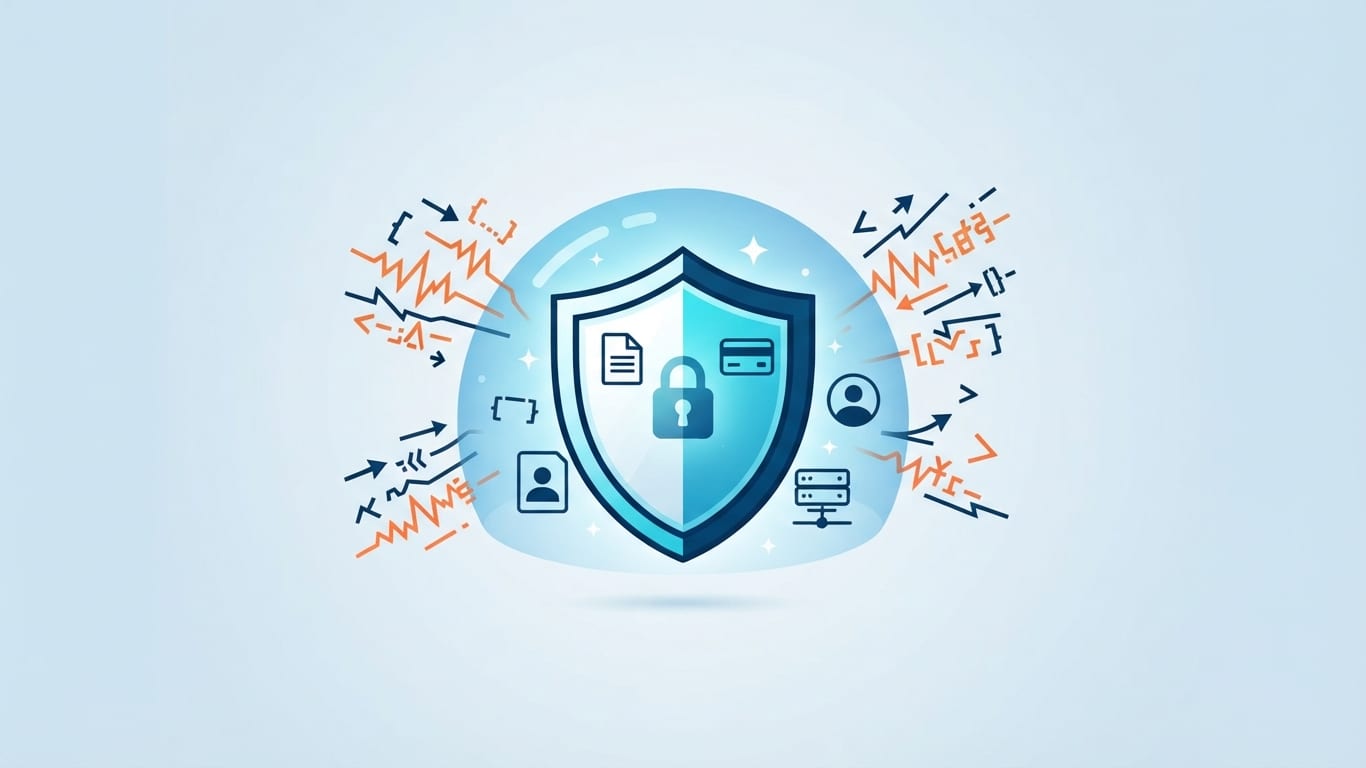
| Security shield protecting sensitive data from cyber threats |
Evolution of Attack Vectors Beyond Traditional Email
While historically conducted via email, modern phishing utilizes SMS text messages (smishing), phone calls (vishing), social media direct messages, and QR codes. Attackers continually adapt their delivery methods to bypass traditional perimeter security controls and reach users on personal devices, where security filters are often less robust than those found on corporate email servers.
QR code phishing, often called quishing, embeds malicious links within scannable images that bypass standard text-based URL filters, forcing security tools to analyze graphical content rather than plain text. Smishing attacks leverage the high open rates of mobile text messaging to deploy urgent banking alerts, package delivery notifications, or fake security warnings that prompt immediate action on a smartphone screen. Meanwhile, vishing involves sophisticated phone calls where attackers use voice impersonation or automated recordings to extract sensitive corporate information. This multi-channel approach ensures that even if enterprise email filters catch traditional payloads, alternate communication channels remain vulnerable to exploitation by persistent threat actors.
The Role of Artificial Intelligence in Modern Campaigns
The technical sophistication of deceptive messages has increased dramatically with the adoption of advanced software tools. Attackers increasingly leverage generative AI to eliminate grammar errors and rapidly scale hyper-personalized spear-phishing campaigns, with platforms observing sudden surges in AI-crafted attacks. In the past, poorly worded emails with broken English and awkward phrasing served as a primary indicator of fraudulent activity, allowing alert users to spot scams easily.
Generative AI allows threat actors to craft convincing, error-free messages in multiple languages within seconds, mirroring the exact tone, style, and context of legitimate corporate communications. This automation removes the traditional language barrier that once helped recipients identify amateur phishing attempts, enabling cybercriminals to launch thousands of tailored, highly convincing attacks simultaneously. Consequently, recognizing fraudulent communications now requires looking deeper than surface-level grammar and spelling mistakes, focusing instead on behavioral anomalies, unexpected requests, and unusual data access patterns.
Target Brands and Human Response Times
Certain corporate entities face disproportionate imitation by criminal groups seeking instant user trust. Microsoft remains the most frequently imitated brand globally, targeted in roughly 43% of brand-impersonation phishing attempts, as threat actors leverage familiarity with office productivity suites, cloud storage platforms, and enterprise login portals to deceive unsuspecting users.
The speed at which humans process and react to these triggers leaves very little margin for error. Security simulations indicate that the median time for an unsuspecting user to click a malicious phishing link is just 21 seconds. This rapid reaction window underscores why automated technical defenses are necessary to protect users from their own split-second decisions. When an employee receives a notification that appears to require immediate action on a heavily relied-upon platform like Microsoft 365, the natural inclination is to click first and think later, highlighting the critical need for friction-inducing security controls.
Technical Controls and Defensive Frameworks
Mitigating modern credential harvesting requires a combination of user vigilance and robust backend architecture. Organizations prevent phishing by implementing enterprise email security filters, multi-factor authentication (MFA), and adopting Zero Trust security frameworks to limit lateral movement and contain potential breaches before they escalate.
Implementing a Zero Trust architecture ensures that even if an employee falls victim to credential theft, the attacker cannot automatically access sensitive internal databases or critical infrastructure. For a deeper understanding of how strict access policies mitigate breach impacts, review What Are Zero Trust Security Models: A Complete Guide to see how continuous identity verification protects network segments. By verifying every access request regardless of where it originates, organizations can drastically reduce the dwell time of attackers who manage to slip past initial perimeter defenses.
Best Practices for Individual Verification
End-user awareness remains a critical line of defense against targeted deception in both personal and professional environments. The best defense relies on awareness, carefully verifying URLs and sender addresses, and never acting on urgent, high-pressure demands without independent confirmation from trusted sources.
When an unexpected message demands immediate action regarding financial accounts, password resets, or administrative approvals, users should independently navigate to official websites by typing the known URL directly into their browser rather than clicking embedded links. Maintaining a healthy skepticism toward unsolicited communications prevents most social engineering attempts from succeeding. Employees should also be encouraged to report suspicious messages to their IT security teams immediately, turning every user into an active sensor for the organization's collective defense network.
FAQ
Is phishing a cyber attack?
Yes, phishing is firmly classified as a type of cyberattack and cybercrime. Law enforcement agencies and security researchers treat these deceptive campaigns as serious criminal offenses due to their role in widespread financial fraud, intellectual property theft, and network compromise. Threat actors use these methods to illegally access protected computer systems and exploit individuals or enterprises.
Is phishing a social engineering attack?
Phishing is a direct form of social engineering, meaning it exploits human psychology, trust, and error rather than directly hacking software code. Instead of breaking through software firewalls with technical exploits, attackers manipulate human emotions such as fear, urgency, or curiosity to gain voluntary cooperation and sensitive data from their targets.
What are phishing attacks designed to do?
Phishing attacks are designed to manipulate victims into taking harmful actions, such as sharing login credentials, disclosing credit card numbers, wiring money, or downloading malware like ransomware. These actions allow threat actors to steal sensitive data, extort organizations, compromise financial accounts, and establish persistent access within enterprise networks.
What is the best way to prevent phishing attacks?
The best defense relies on awareness, carefully verifying URLs and sender addresses, and never acting on urgent, high-pressure demands without independent confirmation. Organizations also prevent phishing by implementing enterprise email security filters, multi-factor authentication (MFA), and adopting Zero Trust security frameworks to protect critical assets.
How common are phishing attacks in global cyber breaches?
Over 90% of all cyberattacks begin with a phishing email, and IBM data notes that phishing is the most common initial data breach vector, accounting for 15% of all breaches. Global tracking networks recorded roughly 3.8 million distinct phishing attacks during 2025 alone, demonstrating their overwhelming prevalence in the modern threat landscape.