Understanding how to use ai in ux design
Designers harness artificial intelligence by integrating machine learning models into research, wireframing, and usability testing tasks. Coursera notes that artificial intelligence is incorporated into UX design to analyze large volumes of data, make data-driven decisions, and predict user behavior.
 TechMediaArch.com |
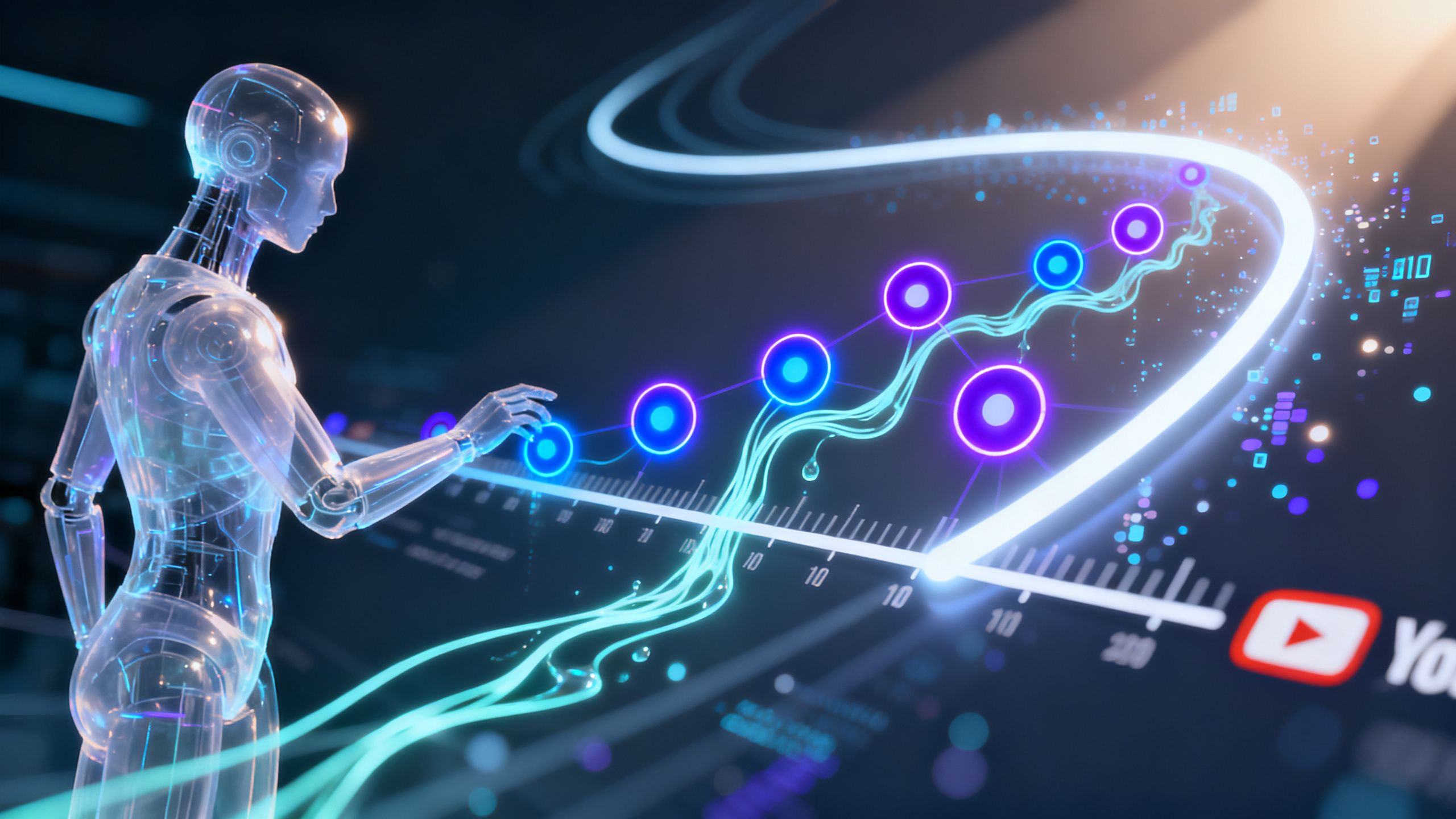
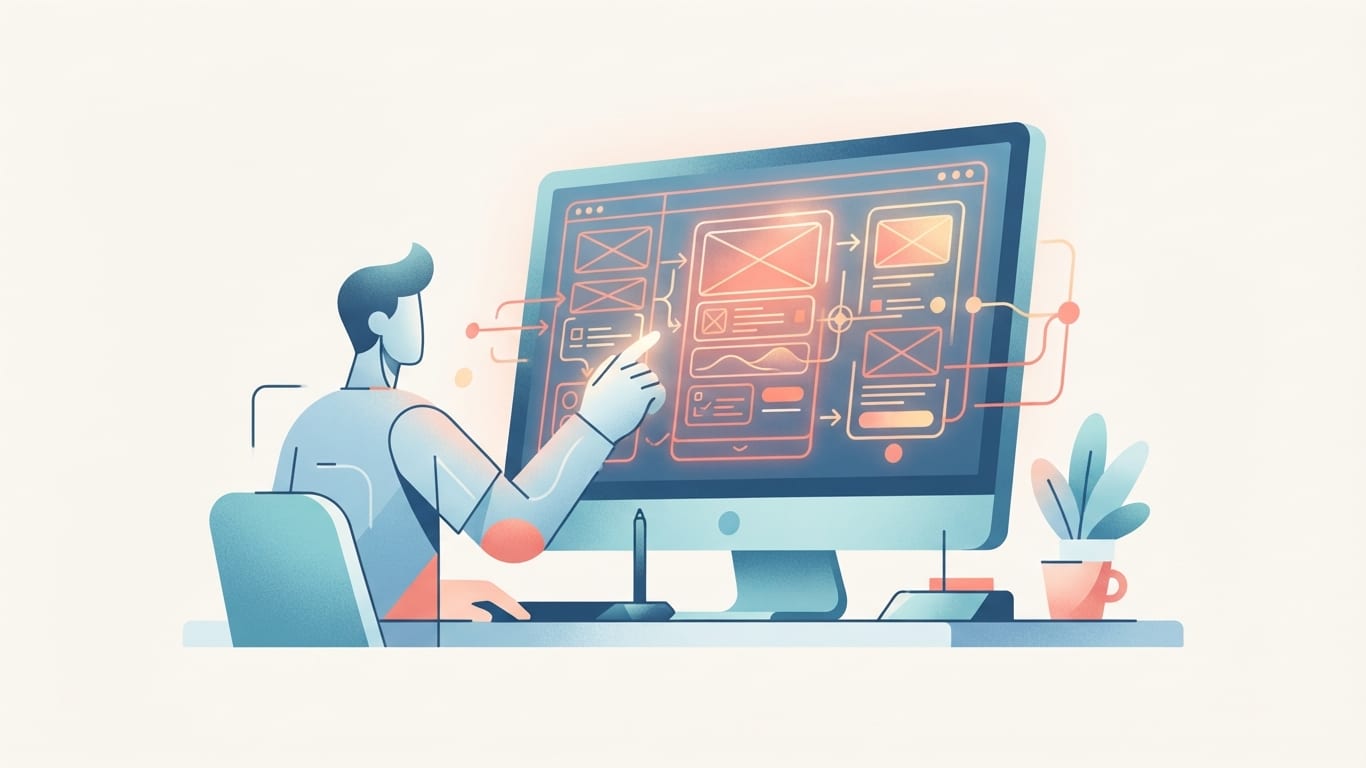
| A UX designer collaborating with an AI interface on a computer screen |
Integrating artificial intelligence across the design workflow
Professionals integrate artificial intelligence across the complete design process, according to YouTube, spanning from user research synthesis to final usability testing and iteration. Large language models like ChatGPT are used by designers to refine content, organize thoughts, and assist with keywords or language translation, as reported by Medium.
Designers prepare input text descriptions and specific prompts incorporating information architecture insights to translate structural wireframes into formats machines can understand, as outlined by Medium. Furthermore, NN/G states that UX practitioners frequently utilize artificial intelligence as an individual ideation and thinking partner, treating it as a cybernetic teammate to enhance group interactions and workshops.
Product teams utilize Maze AI to automate user testing tasks without executing manual administrative grinds, according to Zignuts. These workflow integrations allow practitioners to speed up early exploratory tasks without sacrificing rigorous evaluation methods.
Evaluating specialized artificial intelligence tools for design tasks
Veza Digital reports that Dovetail AI is categorized as a top tool for research and discovery, helping with transcription and summarization.
- UX Pilot is recognized as a leading AI tool for wireframing, exploration, and compressing the entire UX lifecycle with built-in validation, according to UX Pilot.
- Relume AI is highlighted as a top choice for agencies building marketing sites destined for Webflow architecture, according to Relume AI.
- Google Stitch serves as a prominent tool for rapid AI-generated UI concepts and UI-to-code conversions, as noted by Google Stitch.
- Motiff has been cited by design reviewers as an effective all-around AI-powered UI interface tool, according to Medium.
- AIDesigner stands out for producing high-fidelity interface layouts with polish comparable to human-created professional work, as reported by AIDesigner.
- Flowstep is featured as a top platform for generating multi-screen UI variations from text prompts alongside code export features, according to Flowstep.
For related platform capabilities, readers can review The 10 Best AI Tools to Revolutionize Your Workflow in 2026 to see how broader software ecosystems operate.
Automating routine workflows and component taxonomy
Artificial intelligence improves design workflows through several key benefits:
- increasing accessibility
- customizing user journeys
- decreasing design bias
- optimizing prototyping and testing, according to Contentsquare
- offering an inventory perspective on design systems, defining component taxonomy from core tokens up to complex top-level navigation components, as Artkai states
If a project task has a fully written brief before design starts, such as a landing page matching a mature design system, an AI model can execute a usable first draft, notes Fuselab Creative.
Insights adds that artificial intelligence handles routine production tasks like drafting screens and writing first-pass copy, but it does not replace real user research, problem framing, or systems thinking.
Models can quickly convert hand-drawn sketches into digital formats while drafting placeholder text to jumpstart visual development. This rapid production capability lets teams visualize initial concepts faster than traditional manual layout construction.
 TechMediaArch.com |
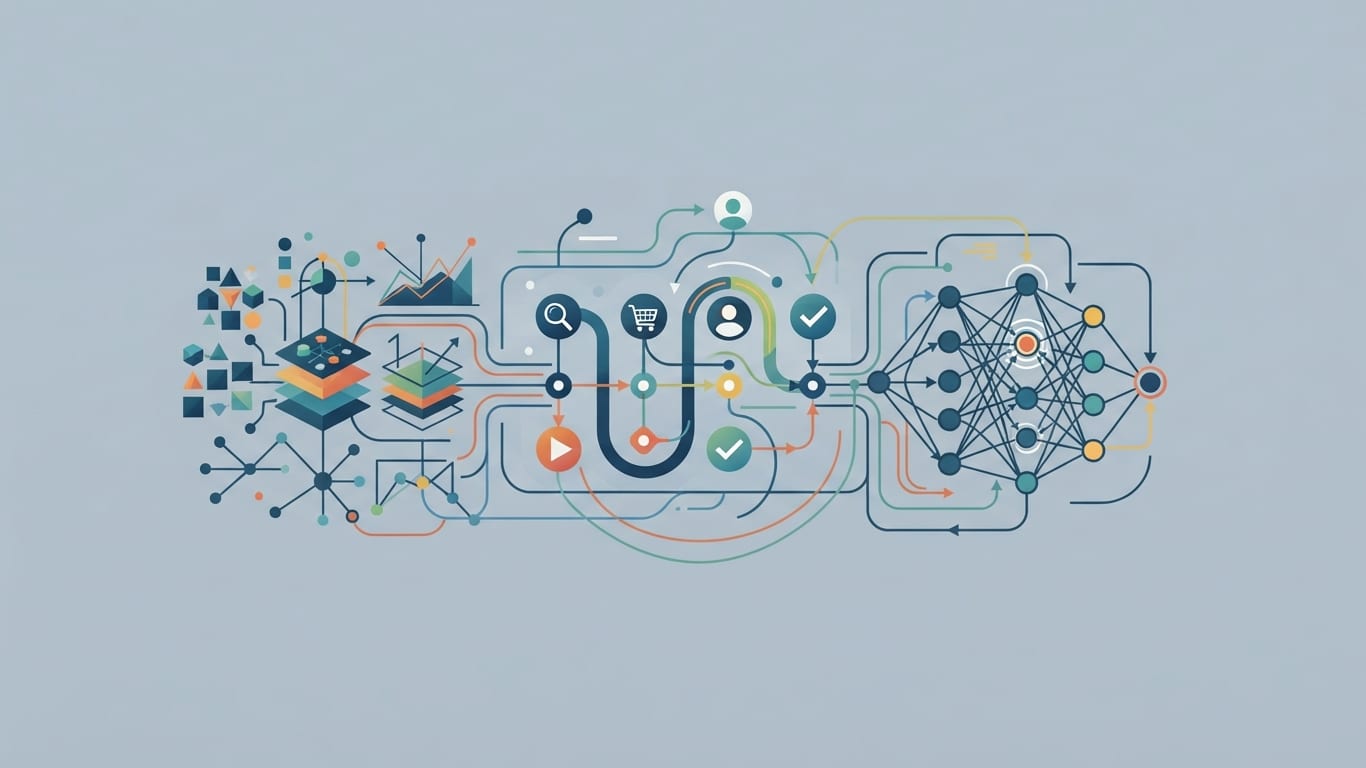
| Data analytics and user journey mapping graphics connected by digital nodes |
Exploring structured prompting frameworks
YouTube reports that the TCREI prompting framework and generative AI tools are taught by Google UX design leaders to help iterate on design ideas and develop portfolio copy.
Medium notes that artificial intelligence changes where tools sit in a workflow by accelerating ideation and exploration, while standard design platforms retain responsibility for refinement, validation, and developer handoff. Understanding these workflow shifts helps clarify Understanding the Core Difference Between UX and UI Design across modern digital product teams.
By pairing structured textual prompts with traditional design constraints, teams maintain brand consistency across automatically generated variations. This structured approach bridges the gap between raw model outputs and production-ready interface elements.
Examining why human capabilities remain irreplaceable
Human core skills such as empathy, creativity, and judgment cannot be replaced by artificial intelligence, and these traits become even more valuable over time, according to MadeCurious.
Fuselab Creative states that artificial intelligence cannot replace UX designers because models cannot run research, frame a problem before a brief exists, or judge generated work on their own.
Coursera notes that artificial intelligence can augment specific skills like writing and research, but it remains a substitute for professional human judgment. Approximately 90% of web design layout styles can become heavily automated or pattern-driven, making the human ability to add unique strategic value critical, according to Medium.
Machines lack the lived experiences required to genuinely understand emotional user needs during contextual inquiry sessions. Consequently, human oversight remains vital for interpreting nuanced behavioral insights gathered from qualitative research.
Navigating the future of human-led strategy
Artificial intelligence does not replace UI/UX designers, but instead automates repetitive tasks, accelerates user research, and assists in creating hyper-personalized experiences, according to Simplilearn. Qt states that artificial intelligence will not replace UX designers; rather, it replaces specific tasks within UX work such as generating interfaces in seconds and exploring multiple design directions.
Veza Digital reports that evaluated 2026 industry software shows AI excels at mechanical execution, such as generating placeholder copy and sketch-to-digital conversions, while humans must retain strategic work like brand direction and accessibility judgment.
Reddit notes that while AI may replace some entry-level or computer-based routine production tasks, UX design becomes increasingly essential in emerging AI-driven spaces to design trust into opaque systems. YouTube highlights that the bar for UX designers is rising, shifting focus toward deep product thinking, taste, and knowing precisely which user problem is worth solving.
FAQ
can ux design be replaced by ai
Artificial intelligence does not replace UI/UX designers, according to Simplilearn, because it automates routine tasks instead of handling core strategy. Fuselab Creative adds that models cannot run research, frame a problem before a brief exists, or independently judge generated work.
is ux design being replaced by ai
Qt states that artificial intelligence replaces specific mechanical tasks within UX work, such as generating interfaces in seconds, rather than replacing the discipline entirely. Routine production elements are automated, but human strategic oversight remains mandatory.
what is the best ui ux design ai
Industry platforms vary by specific function, with Dovetail AI leading research and discovery for transcription, according to Veza Digital. UX Pilot is recognized as a leading tool for wireframing, exploration, and lifecycle compression, while tools like Relume AI and Google Stitch serve specialized architecture and UI-to-code workflows.
how to use ai in ux design process
Professionals integrate artificial intelligence across the complete design process, spanning research synthesis, problem definition, and prototyping, according to YouTube. Designers use specific text prompts and information architecture insights to translate structural wireframes into machine-readable formats, as noted by Medium.
is ux design safe from ai
MadeCurious reports that human core skills such as empathy, creativity, and judgment cannot be replaced by artificial intelligence. Reddit highlights that UX design becomes increasingly essential in emerging AI-driven spaces to design trust into opaque systems.